Navigated to undefined

- Enhancing Decision-Making Skills: Engaging in social deduction games or activities can improve decision-making skills by requiring players to assess and interpret social cues. Individuals who regularly engage in social interactions requiring trust and cooperation tend to develop better decision-making abilities and interpersonal skills(1).
- Developing Trust and Cooperation: Social deduction theory underscores the importance of trust and cooperation in social interactions. Individuals who are skilled at detecting deception and building trust are more likely to foster cooperative relationships within groups, leading to greater overall success and satisfaction(2).
- Real-world Settings: Insights from social deduction theory can be applied to real-world scenarios, such as negotiations, politics, and business. Understanding social dynamics and the motivations behind people's actions can inform strategies for conflict resolution and decision-making in organizational settings(3).
- Information Asymmetry: Players possess incomplete information about each other's roles, necessitating deductive reasoning and strategic thinking. Research suggests that engaging in deductive reasoning tasks enhances cognitive abilities and problem-solving skills(4), providing players with opportunities to sharpen their mental acuity.
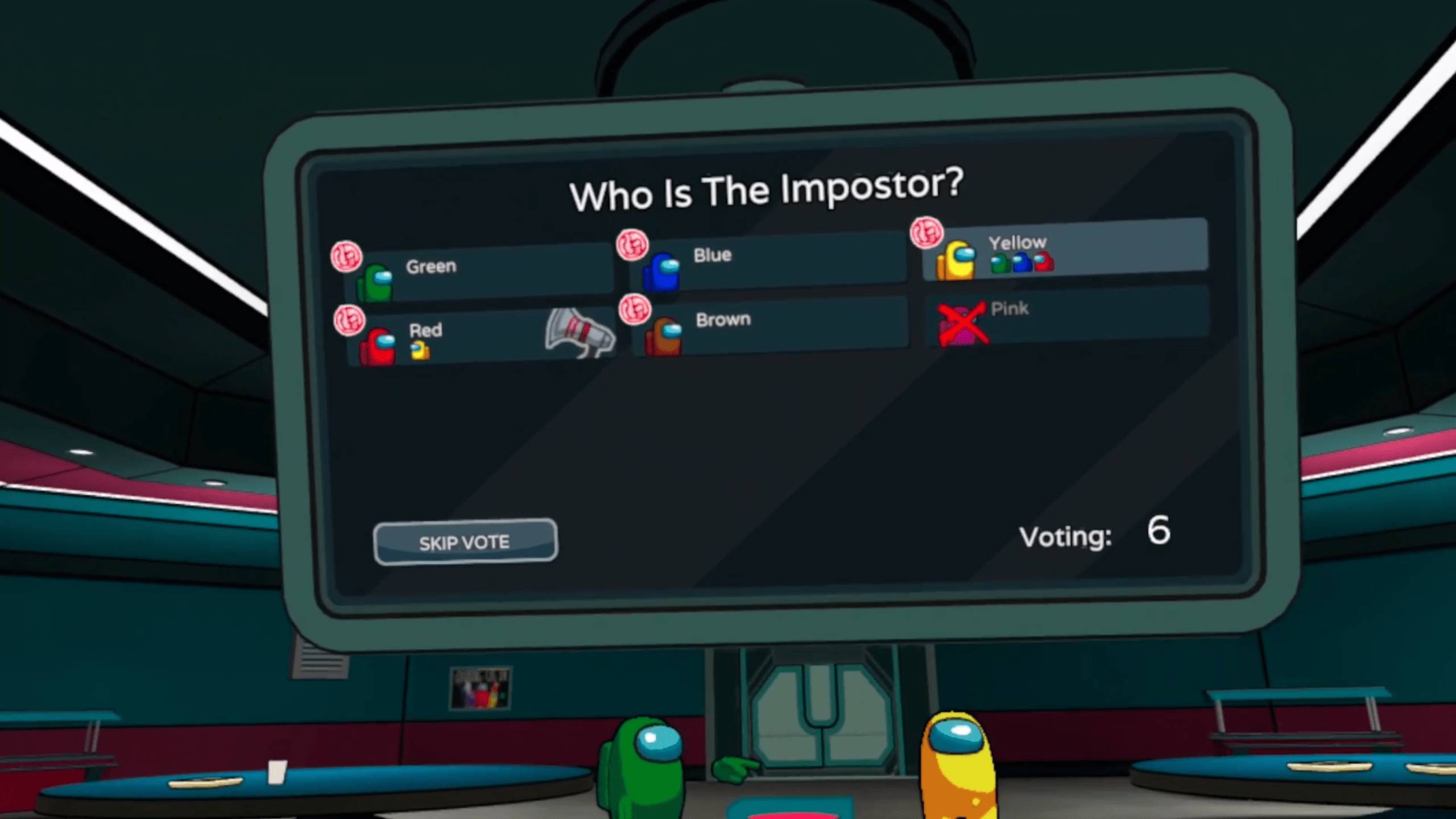
- Trust and Betrayal: Central to Among Us VR is the theme of trust, challenging players to discern truth from deception. Studies show that engaging in trust-based interactions fosters prosocial behavior and enhances interpersonal trust(2), enabling players to cultivate trust and cooperation skills vital in both virtual and real-world social contexts.
- Group Dynamics: Encouraging alliances and cooperation, Among Us VR mirrors real-life group dynamics, where collaboration is essential for success. Research indicates that participation in cooperative group activities promotes positive social interactions and enhances feelings of belongingness and camaraderie(5), offering players a sense of community and shared purpose.
- Deception and Manipulation: Among Us VR rewards players skilled in deception and manipulation, encouraging strategic gameplay and critical thinking. Studies demonstrate that engaging in strategic deception tasks improves cognitive flexibility and decision-making abilities(6), empowering players to hone their strategic thinking skills and adaptability in dynamic social environments.
![Among Us VR]()