Night Shift
Project Type
Client ProjectClient/Partner
University of PittsburghGenre
Educational, Health & WellnessGame Engine
UnityPlatform
MobileTarget Audience
AdultOverview
Night Shift is a mobile-based medical simulation game developed by Schell Games in collaboration with the University of Pittsburgh. Built on the Unity engine, the game was created as part of a federally funded research study to address "physician recalibration." It challenges ER doctors and trauma surgeons to triage and treat critically injured patients in a high-pressure, fast-paced virtual environment. By using a narrative-driven "adventure" style, the game helps doctors overcome cognitive biases that can lead to under-triage in real-world trauma centers. Night Shift has been scientifically proven to improve clinical decision-making, earning a Bronze Medal at the Serious Play Awards.
- Schell Games
- University of Pittsburgh
- Physician recalibration
- trauma triage training
- reducing cognitive bias in medicine
- Narrative-driven adventure
- medical decision-making under pressure
- patient triage
- Improving under-triage rates in non-trauma centers
- What is the medical problem Night Shift aims to solve?
- The game addresses under-triage. In real life, doctors in non-trauma centers sometimes fail to recognize when a patient has a severe, life-threatening injury because they don't see them often enough. This leads to patients being kept at low-level facilities instead of being transferred to a specialized trauma center.
- How does the "Narrative" help with medical training?
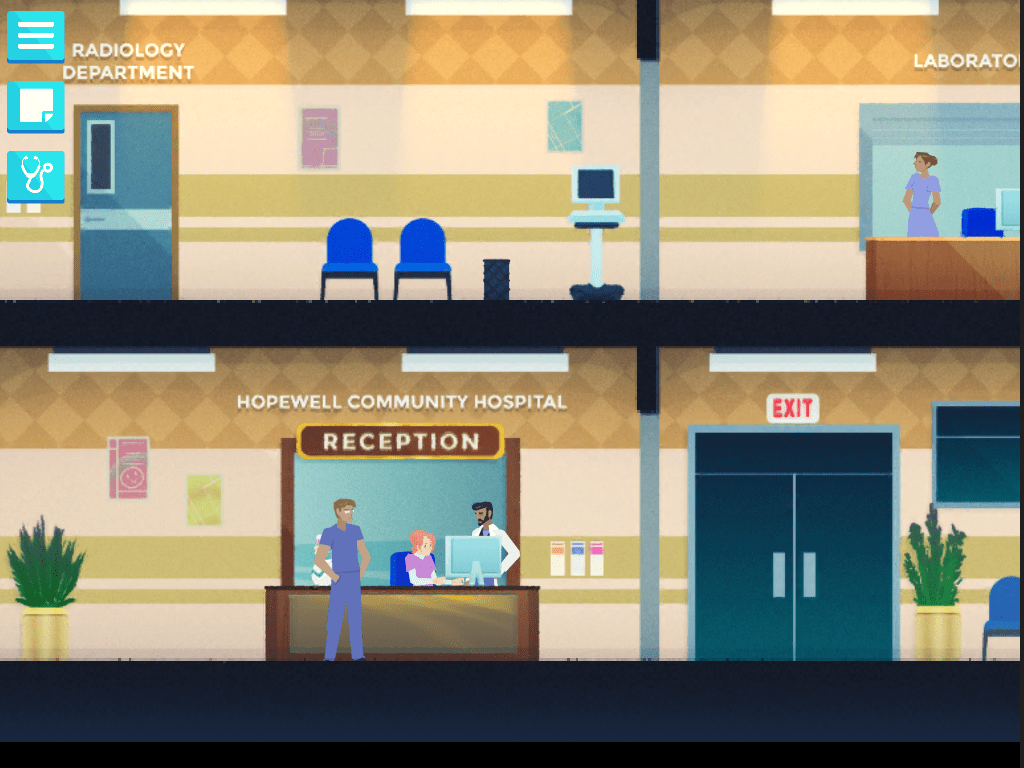
- Unlike a dry textbook or a simple quiz, Night Shift uses a story-driven approach. Players step into the shoes of a doctor who has moved back to their small hometown to work in the local ER. By wrapping the medical decisions in a compelling narrative with personal stakes, the game increases emotional engagement, which research shows helps with long-term knowledge retention and behavior change.
- Is there scientific proof that this game works?
- Yes. The game was part of a randomized controlled trial published in the British Medical Journal (BMJ). The study found that physicians who played Night Shift for just one hour were significantly more likely to correctly triage severe trauma cases in simulated scenarios compared to those who used traditional educational materials.
- How do players interact with patients in the game?
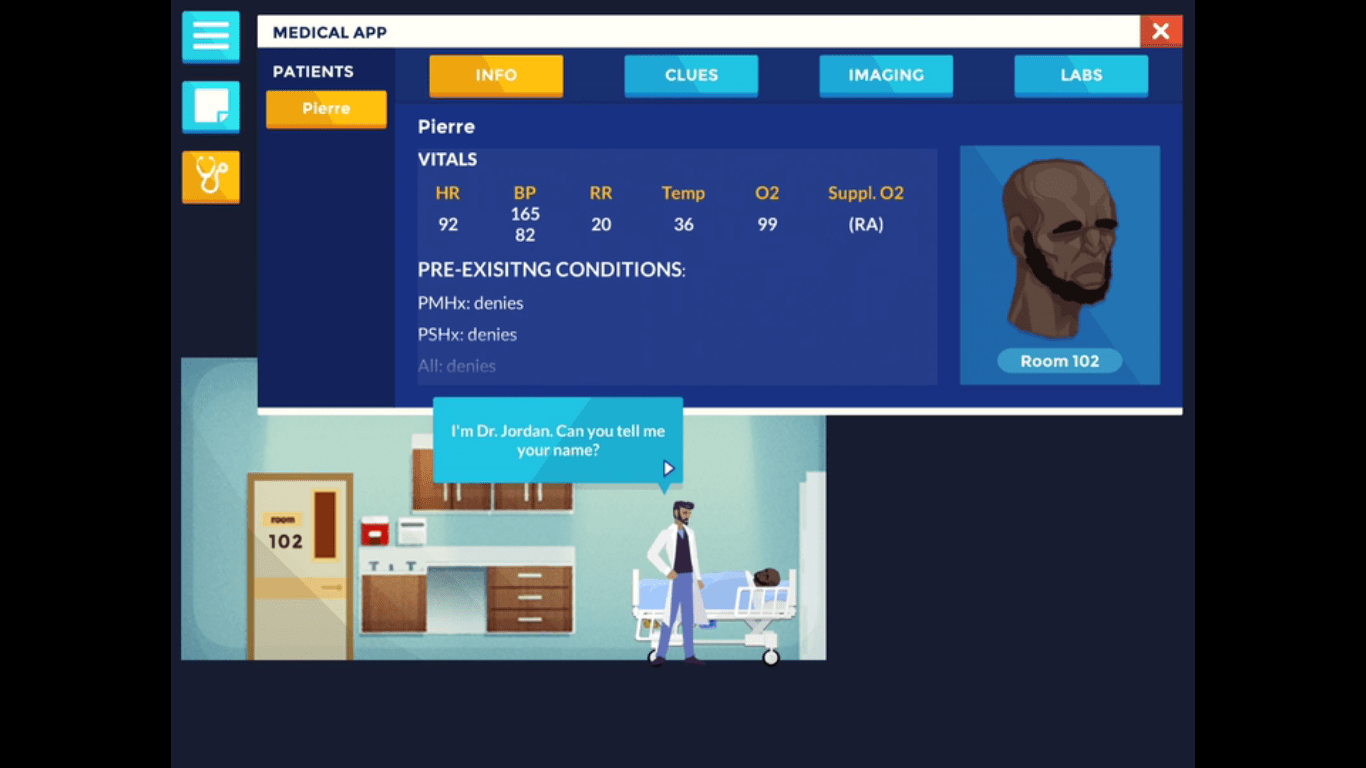
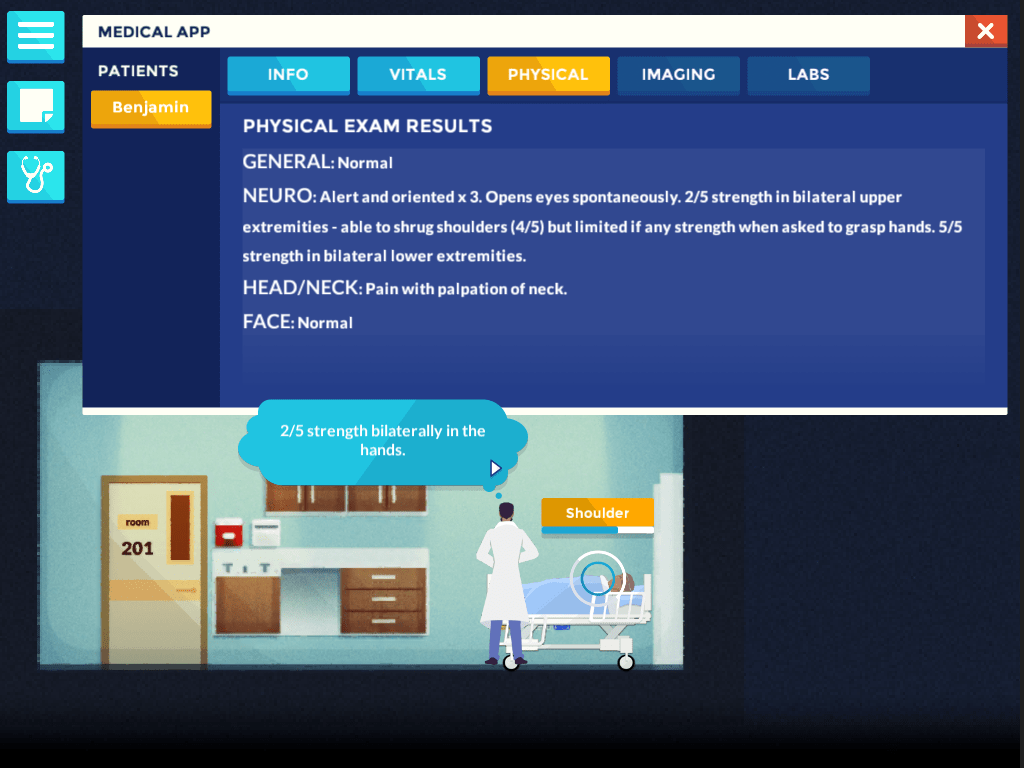
- Players must examine patients, interpret vital signs, and decide on immediate interventions. The game simulates the "System 1" (fast, intuitive) and "System 2" (slow, analytical) thinking processes, forcing doctors to recognize "red flags" quickly while managing multiple patients at once.
- Why was it released on Mobile?
- Mobile platforms allow busy physicians to "play" the training in short bursts during their shifts or commute. This "micro-learning" approach is much more compatible with a doctor's schedule than a multi-hour seminar or a desktop-only simulator.
- Who funded this project?
- The project was supported by grants from the National Institutes of Health (NIH), emphasizing its status as a serious clinical tool rather than just an entertainment product.
Awards
Gallery