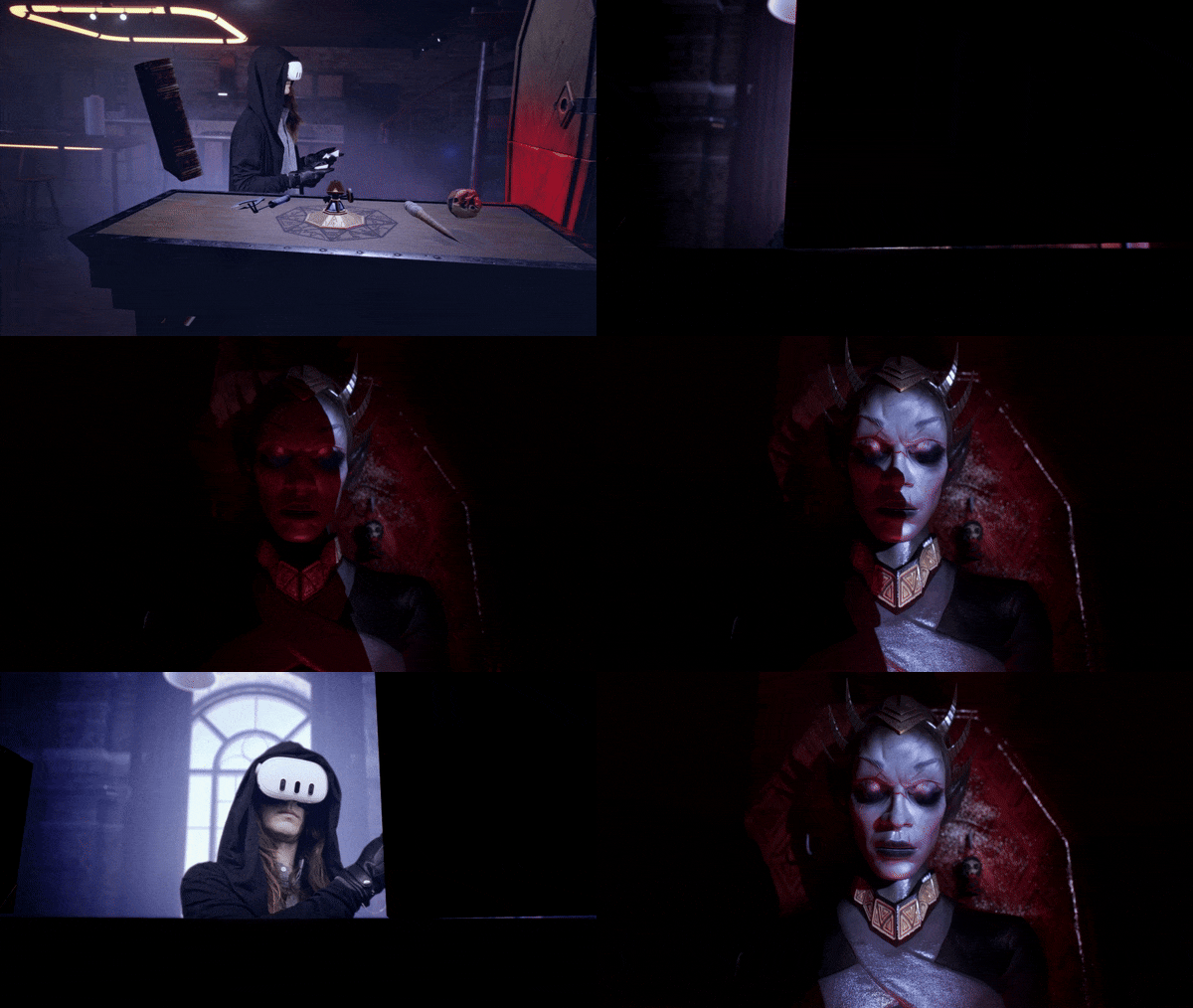
- Immersive Horror Experience: The game’s virtual reality (VR) platform creates a deeply immersive horror atmosphere. While immersed in the vampire’s lair, players must move slowly and carefully, enhancing the tension and making each gesture significant.
- Puzzle Mechanics: Similar to other high-stakes games requiring hand-eye coordination and a steady hand, players must solve intricate puzzles without triggering deadly traps. This aspect adds a layer of cognitive challenge to the horror elements.
- Narrative and Atmosphere: The game's setting in a vampire's lair, combined with atmospheric audio and visual effects, aims to create a deeply engaging and terrifying experience for players.
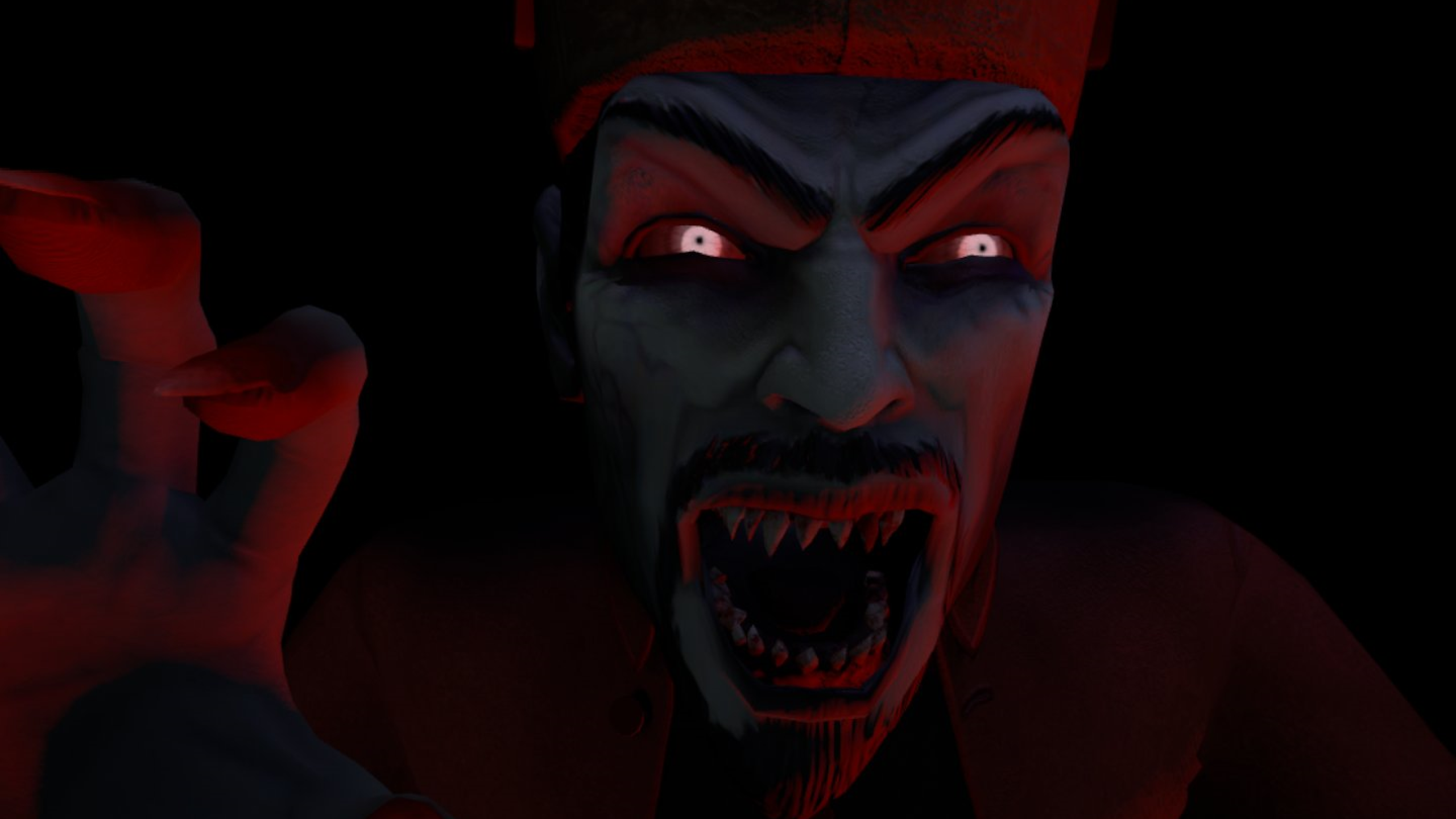
- Jump Scares: Players must think carefully and move slowly while solving puzzles to avoid jump scares, a horrifying highlight of the game. Jump scares are sudden moments of intense surprise or fear designed to shock the audience.
![Mixed reality players getting scared playing Silent Slayer while wearing a VR headset]()
![Mixed Reality moment of gameplay from Silent Slayer as a player opens a coffin revealing a vampire]()
![Jump scare of a vampire]()
Silent Slayer: Vault of the Vampire, a VR horror-puzzle game by Schell Games, serves as a unique platform for controlled fear exposure. As analyzed by Dr. Brooke Morrill, the game’s central mechanic—disarming intricate traps around sleeping vampires—requires extreme precision to avoid sudden jump scares. These "shocks" trigger a physiological arousal cycle (adrenaline and cortisol followed by endorphins and dopamine) that mimics exposure therapy. By confronting fear in a safe, virtual environment, players practice emotional regulation and develop cognitive coping strategies. This process, supported by Excitation Transfer Theory, fosters psychological resilience and can reduce overall anxiety by desensitizing the brain to sudden stressors.
- Schell Games
- Dr. Brooke Morrill
- Exposure Therapy
- Excitation Transfer Theory
- Physiological Arousal
- Emotional Resilience
- Cognitive Coping
- Fight-or-Flight Response
- Stealth-based VR
- jump scares
- managing anxiety through horror
- the "Paradox of Horror"
- How can a scary game like Silent Slayer actually reduce anxiety?
- Through controlled exposure. By experiencing jump scares in a safe, fictional setting, the brain learns to process the "fight-or-flight" response without real danger. Over time, this helps individuals regulate their emotions more effectively when facing real-life stressors.
- What is "Excitation Transfer Theory" in the context of the game?
- This theory suggests that the intense arousal caused by fear is "transferred" into a heightened state of relief and euphoria once the threat is resolved. In Silent Slayer, the "splat" of a jump scare followed by the realization that you are safe creates a powerful cathartic release.
- Does playing horror games improve focus?
- Yes. The physiological arousal from moderate stress increases mental and physical alertness. The need for a "steady hand" to disarm traps in the vampire's lair sharpens cognitive functioning and selective attention.
- What neurochemicals are released during a jump scare?
- The initial shock triggers adrenaline, prepping the body for action. Once the scare passes and the player realizes they are safe, the brain releases endorphins and dopamine, which can lead to feelings of pleasure, achievement, and a boosted mood.
- Why is VR a better platform for this "fear practice" than a flat screen?
- VR provides a deeply immersive atmosphere where every gesture is significant. This level of presence makes the "threat" feel more immediate to the amygdala, making the subsequent practice of staying calm and precise more impactful for real-world resilience.