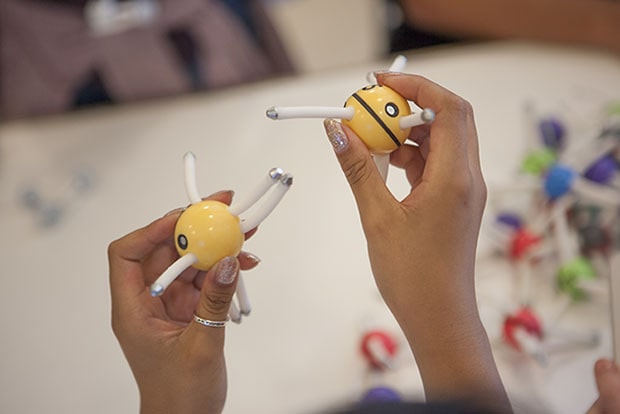
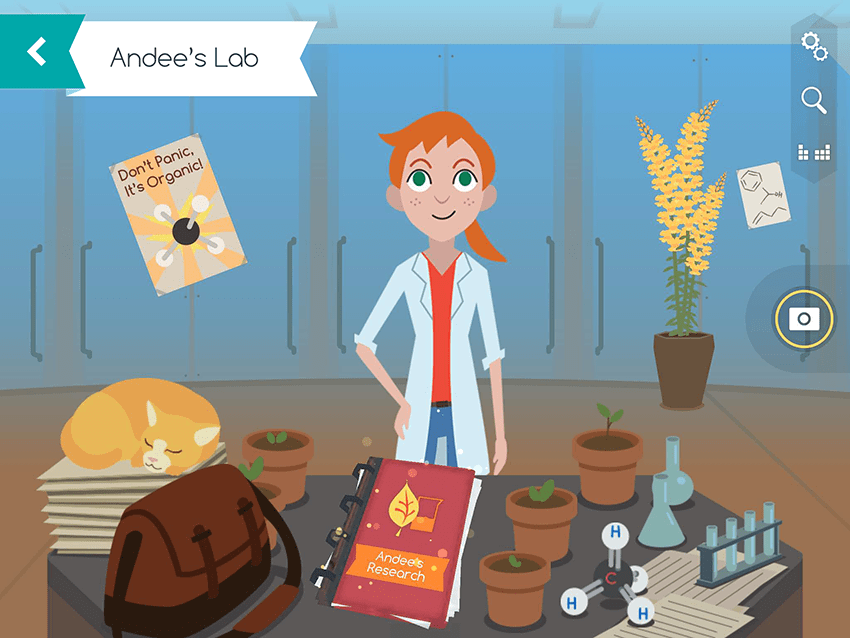
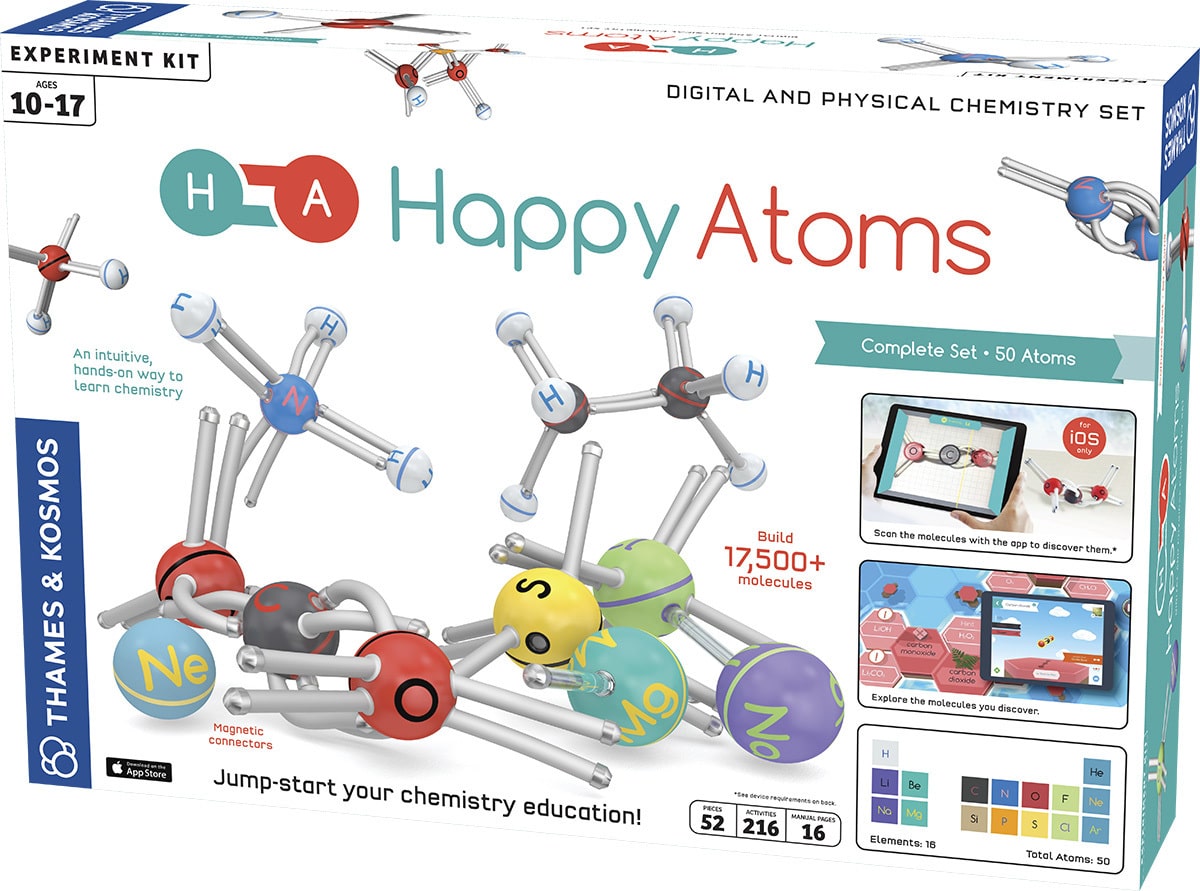
Happy Atoms is a hybrid physical-digital chemistry learning system developed by Schell Games and distributed by Thames & Kosmos. Designed for learners from middle school through college, the system consists of a physical magnetic molecular modeling set and a companion augmented reality (AR) app. Built using the Unity engine, the app utilizes proprietary vision-recognition algorithms to identify molecules built by the user. By representing valence electrons as flexible magnetic "arms," the system provides an embodied experience of chemical bonding where students can literally "feel" the attraction and resistance of atomic forces. This "transformational" tool has been widely recognized for its innovation in STEM education, winning multiple awards including the KAPi for Best Educational Tool.
Schell Games
Thames & Kosmos
Institute of Education Sciences (IES)
Connected Toys
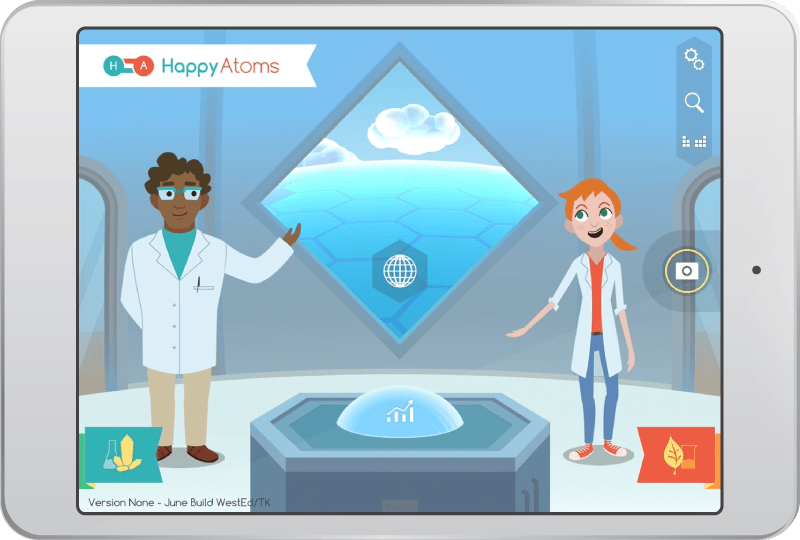
Harper and Andee (Narrative Guides)
Molecule Map
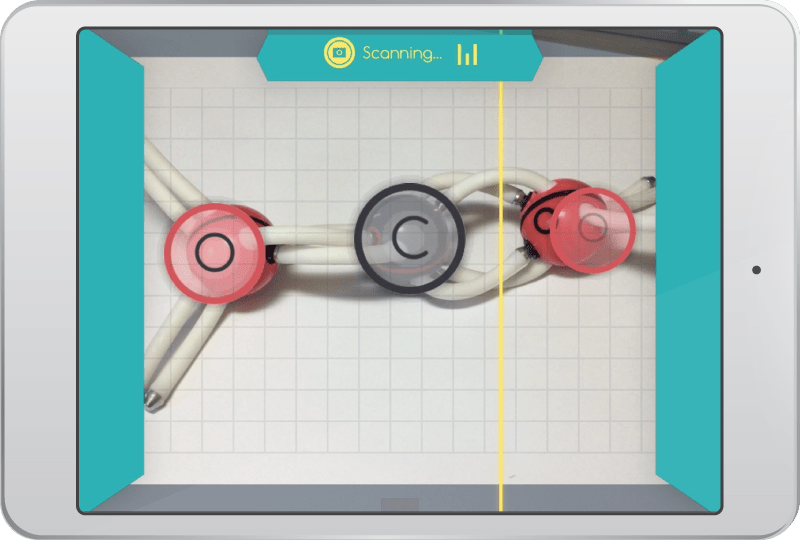
How does the "Scanner" technology work in Happy Atoms?
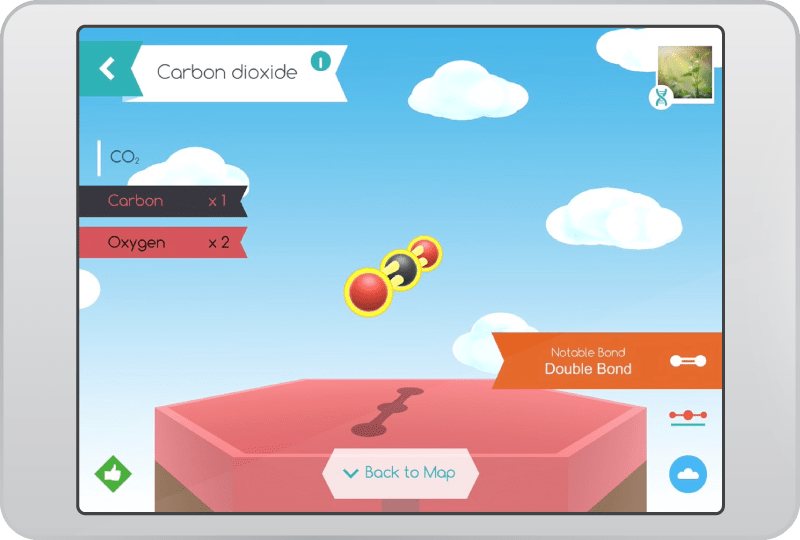
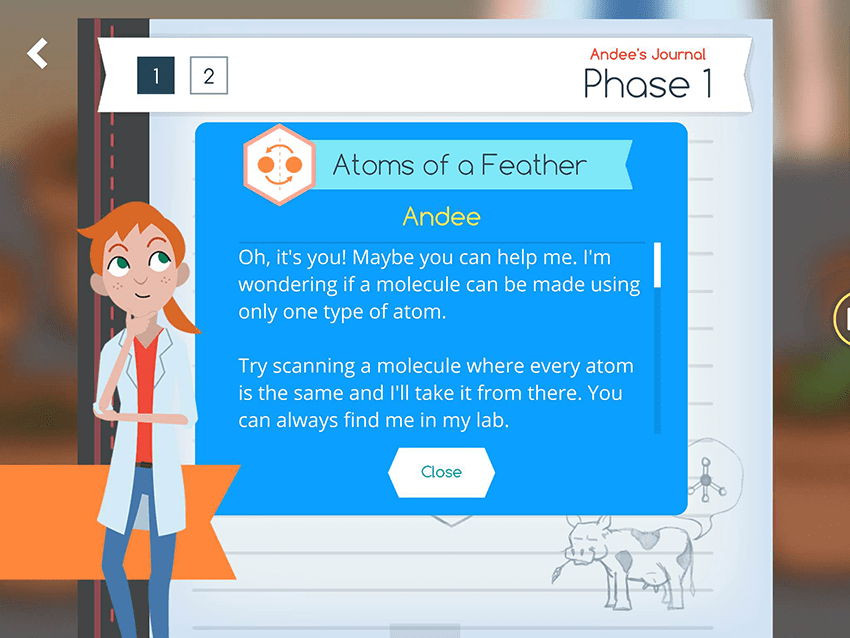
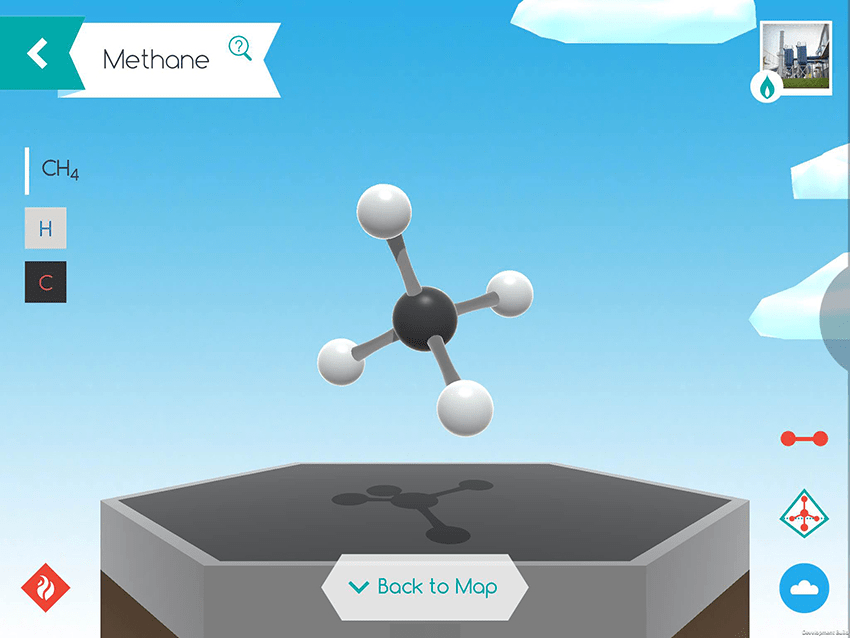
The app uses the device's camera to scan a physically constructed molecule against a white background. Proprietary algorithms analyze the specific combination of the 16 different elements (such as Carbon, Oxygen, and Hydrogen) to identify the resulting molecule. Once identified, the molecule is "unlocked" on a 3D digital map where players can explore its real-world properties.
What is the benefit of the magnetic "arms" over traditional ball-and-stick models?
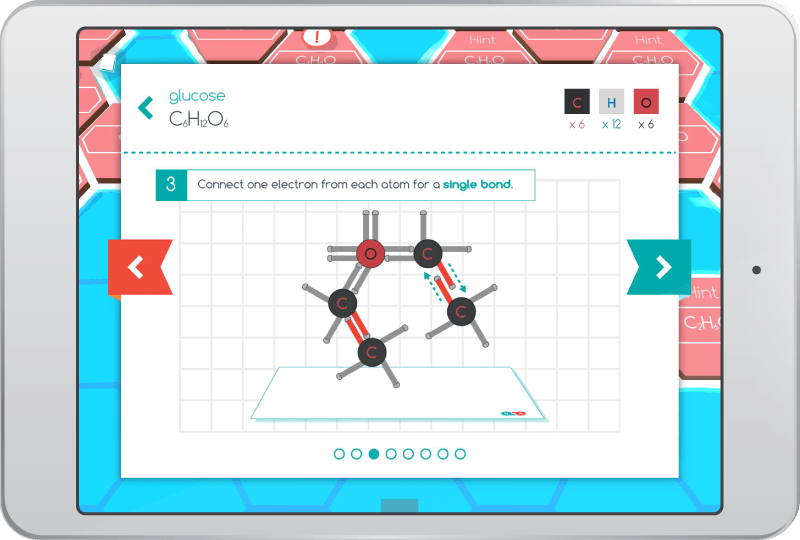
Traditional models use one stick for a bond; Happy Atoms uses two arms per single bond to represent the two valence electrons involved in a covalent bond. This provides a more accurate mental model of electron sharing. Additionally, the magnetic pull provides a tactile metaphor: energy is "released" when bonds form (the snap) and "required" to break them (the pull).
Is there a cheaper version available for classrooms?
Yes. In 2022, a 2D version of Happy Atoms was released. It uses the same image-recognition app but replaces the 3D magnetic models with lower-cost 2D puzzle pieces, making the system more accessible for large-scale school implementation.
What can students learn beyond just building molecules?
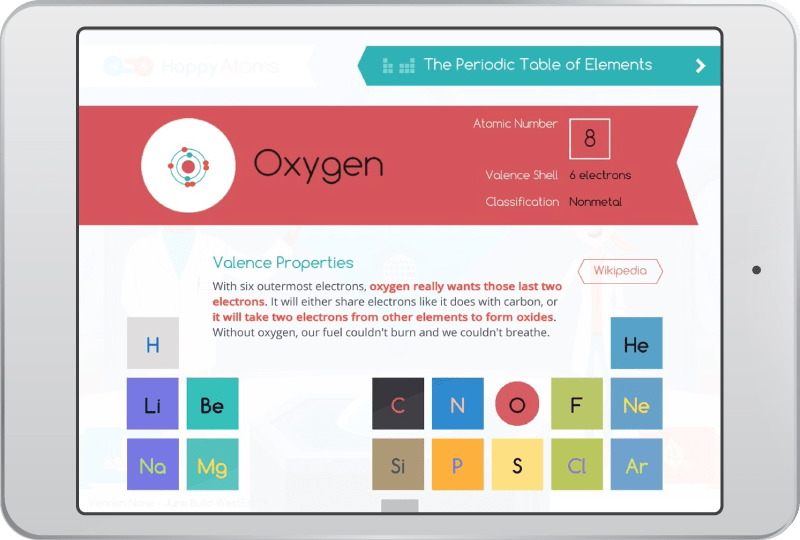
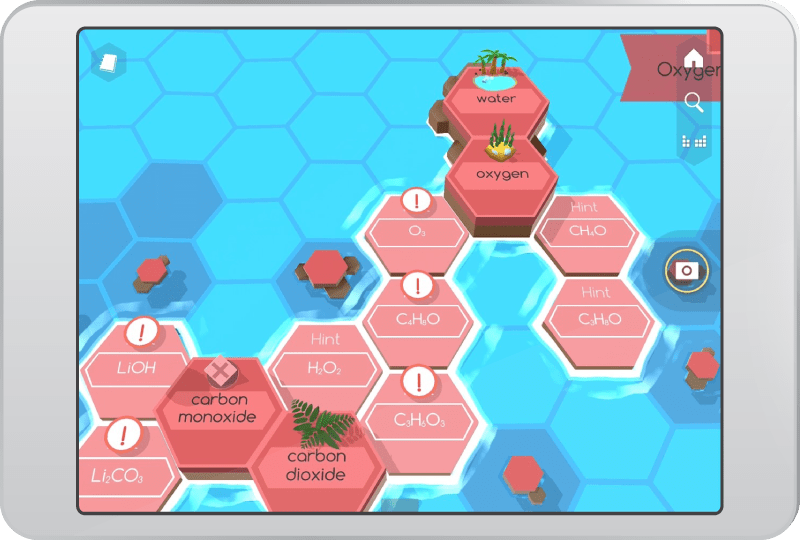
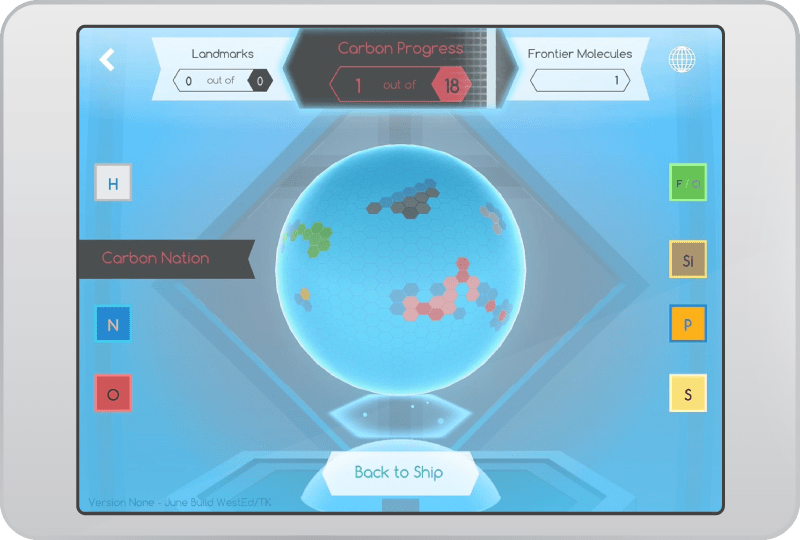
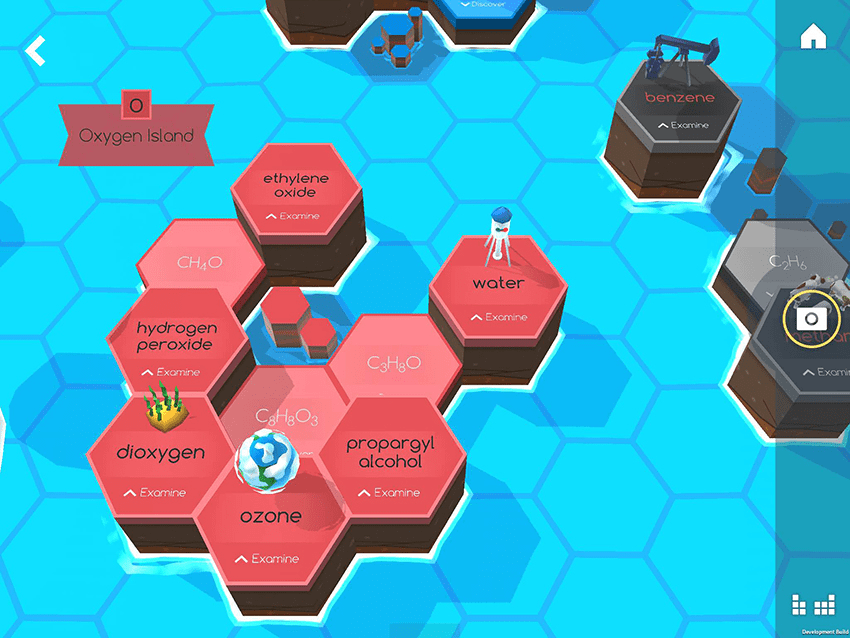
The digital app includes a "World of Molecules" map divided into regions like Carbon Nation and Oxygen Expanse. It features guided research tasks, over 17,500 possible molecular combinations, and interactive lessons on states of matter and the periodic table.
Who funded the development of this project?
The project was significantly supported by a $1 million grant from the Institute of Education Sciences (IES) through the Small Business Innovation Research (SBIR) program, aimed at transforming chemistry education in the U.S.