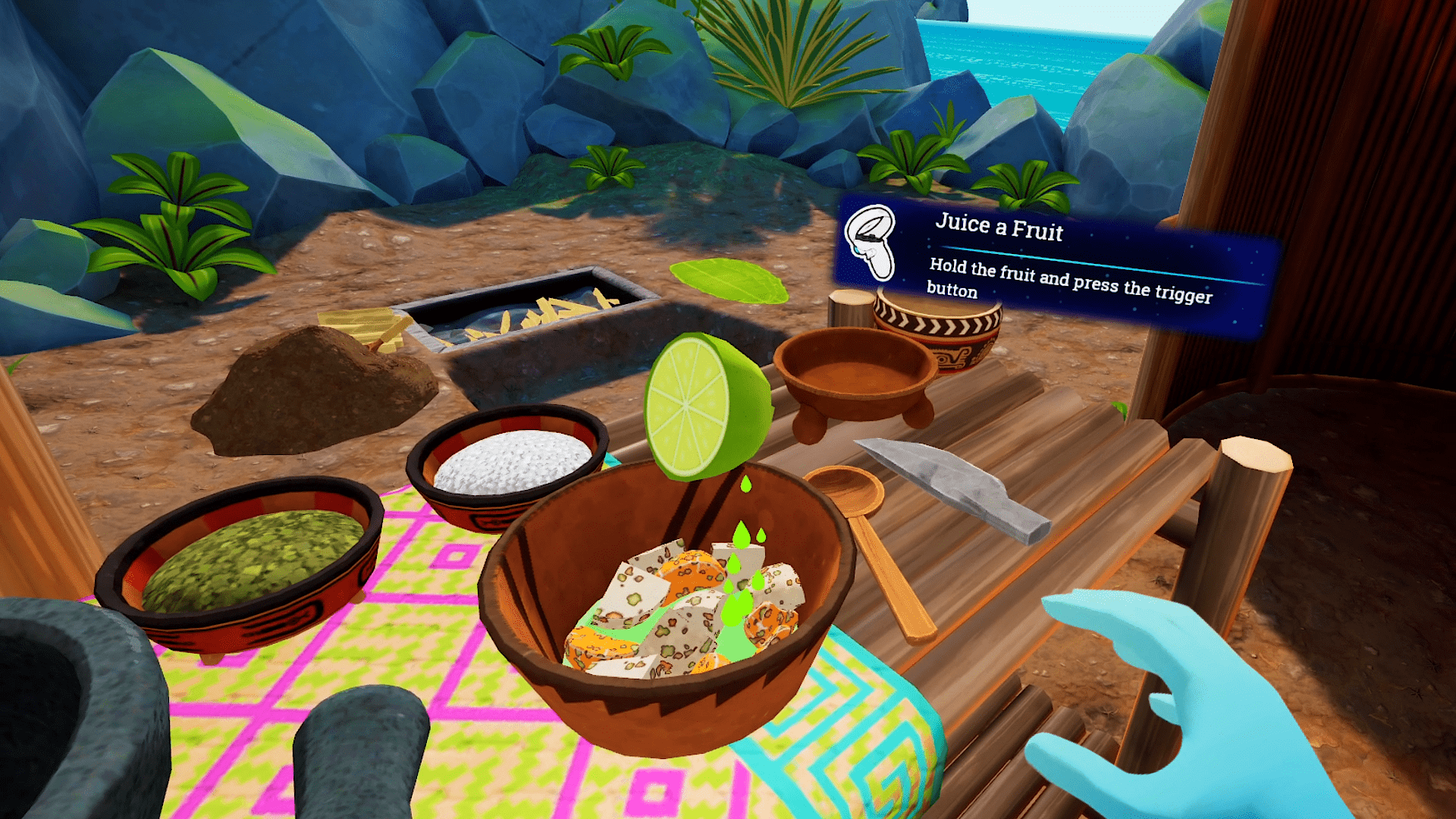
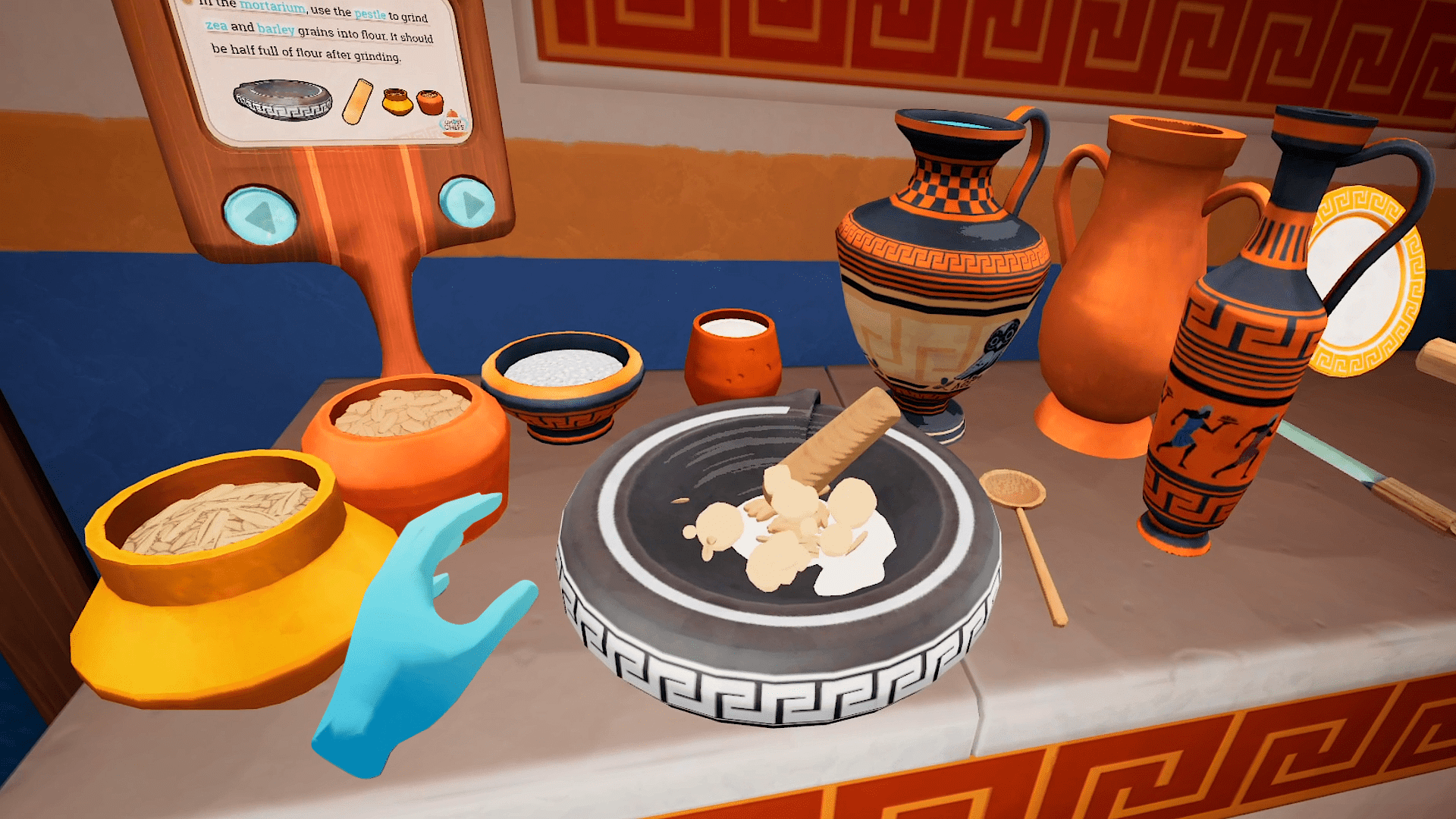
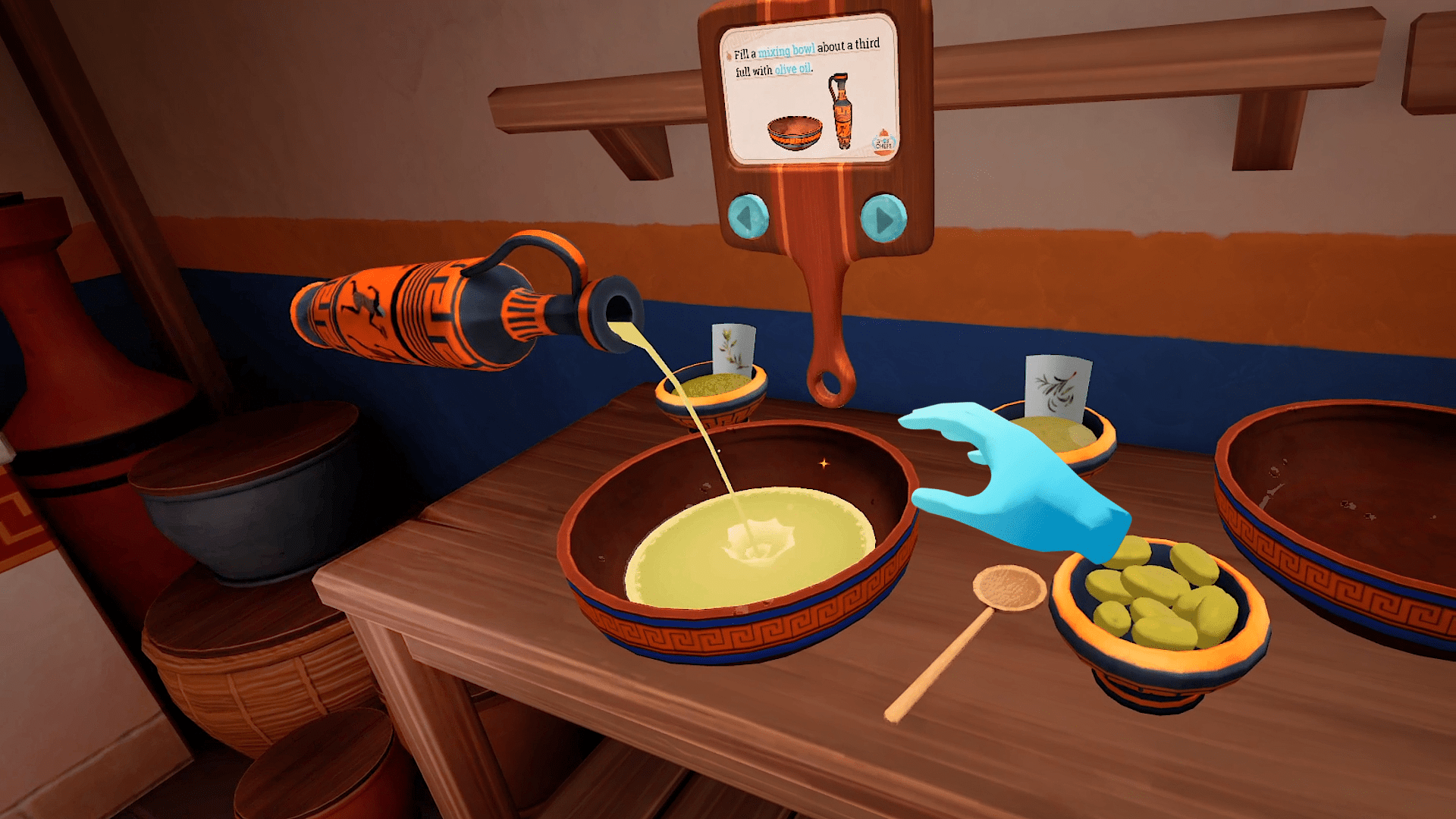
Dr. Brooke Morrill details how Lost Recipes uses virtual reality to overcome the "cultural friction" and detachment typical of traditional history education. By stripping away punitive timers, competitive scoring, and chaotic cooking physics, the game replaces high-pressure gameplay with a welcoming, cozy environment that lowers player anxiety and fosters self-efficacy. Grounded in psychological frameworks like Bandura's self-efficacy theory and the Scale of Ethnocultural Empathy (SEE), the title converts domestic, hands-on tasks—such as grinding grain on a Mayan metate—into a bridge for ethnocultural empathy. Crucially, the game implements a strict ethical framework of cultural humility: positioning the player not as a dominant hero, but as a respectful guest and apprentice guided by authentic native voices.
Ethnocultural empathy
cultural humility
affective filter reduction
situational anxiety.
Bandura’s Self-Efficacy Theory (1977)
Scale of Ethnocultural Empathy (SEE) (Wang et al.
Anti-optimization
non-extractive mechanics
"Apprentice & Guest" framing
Immersive VR knowledge retention
Intangible Cultural Heritage (ICH) game design
What is "performance friction" in living history, and how does Lost Recipes address it?
Performance friction occurs when learners feel intimidated or anxious when trying to use unfamiliar, archaic tools without context. Lost Recipes eliminates this friction by removing typical game failure states (like burning food or losing points to a clock). This creates a safe "mastery experience" where players build confidence handling ancient tools before feeling overwhelmed.
How does the game use domestic cooking tasks to build "ethnocultural empathy"?
According to the Scale of Ethnocultural Empathy (SEE), gaining physical comfort with a culture’s daily, domestic practices triggers empathic perspective-taking. By successfully executing traditional tasks (like grinding grain on a Mayan metate), players develop a felt appreciation for the intelligence, resourcefulness, and ingenuity ancient civilizations applied to daily survival.
Why does the author warn against leaderboard scoring in cultural heritage games?
When a game prioritizes high scores or competitive "winning," players adopt an extractive mindset. They begin viewing delicate or sacred cultural traditions merely as obstacles to be beaten for points. Lost Recipes avoids leaderboards entirely to ensure players focus on sensory connection, historical context, and respectful listening.
What is the long-term psychological goal of practicing "cultural humility" in VR?
The ultimate goal is to shift players away from evaluating history through a biased modern lens—which often dismisses ancient practices as "primitive." By fostering an "other-oriented" openness and reducing subconscious defensiveness toward difference, the game aims to pave the way for more respectful, empathetic engagement with diverse real-world communities.