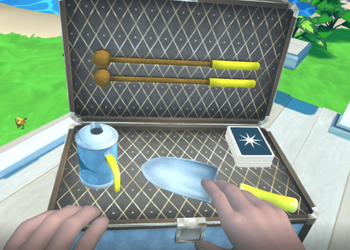

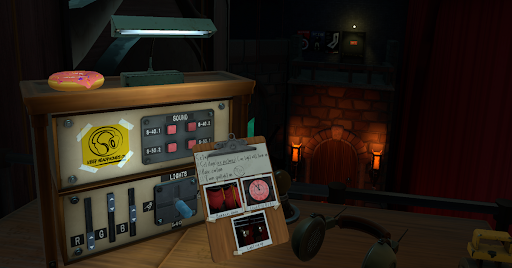
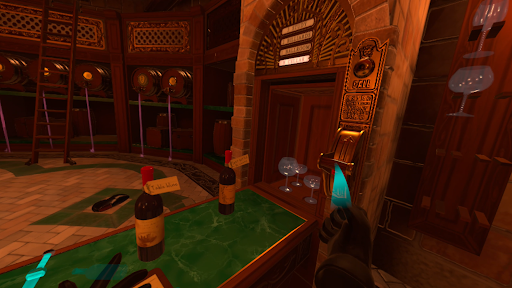
- Limited the size and number of objects that could fit in the dumbwaiter to limit the number of combinations (about 30 combinations)
- Provided about 30 custom audio lines from John Juniper to support every combination (shoes and cheese anyone?).

In "Defining and Delivering Player Fantasy in VR," Schell Games leadership Charlie Amis and Adam Whalen outline a systematic approach to XR development that prioritizes crisp player fantasies over raw simulation. By using a numerical rubric to rate "relatability" and "shareability," the studio identifies high-potential concepts like the "spy fantasy" of I Expect You To Die (IEYTD) and the "action movie skydiving" of Project Freefall. The authors advocate for leaning into emergent gameplay—turning bugs like "infinite fire extinguishers" into intentional power-ups—while using affordance management (the visual cues for interaction) to prevent scope creep. Their core philosophy centers on early playtesting to discover how players naturally express agency, allowing the developers to build "unforgettable, player-driven experiences" without over-engineering.
- Schell Games
- Project Freefall
- Adam Whalen
- Charlie Amis
- player fantasy
- affordance management
- scope creep
- internal locus of control
- phsical presence
- How does Schell Games define a "Strong VR Fantasy"?
- A strong fantasy is one that can be explained in a single sentence and generates excitement before the game is even played (e.g., "Jump out of a plane and fight for the one parachute"). It should be relatable and shareable, leaning into cinematic expectations rather than difficult real-world physics.
- What is the difference between "Player Agency" and "Emergent Gameplay"?
- Player Agency is the player's intentional ability to interact with the world (grabbing, moving, searching). Emergent Gameplay occurs when players use those tools in ways the developers never intended, such as exploiting a bug to create a new movement mechanic.
- How do developers stop players from interacting with things they shouldn't?
- Through Affordance Management. If an object looks interactive (like a screw with a Phillips head), players will try to use it. Developers "cap" or flatten these visual cues to signal that an item is a static asset, effectively guiding player focus back to supported features.
- Why does Schell Games prefer "Cinematic Version" over "Raw Simulation"?
- VR players generally want to feel like the "awesome" version of a character (like a super spy or action hero). Simulation can often feel frustrating or clunky; providing a "Tom Cruise style" experience fulfills the player's expectation of being inherently skilled at the task.
- What is the most important advice for new XR developers?
- Playtest in your first week. Instead of planning every feature, build a basic foundational mechanic and let player discovery guide the development. This helps identify the most fun "happy accidents" early in the process.