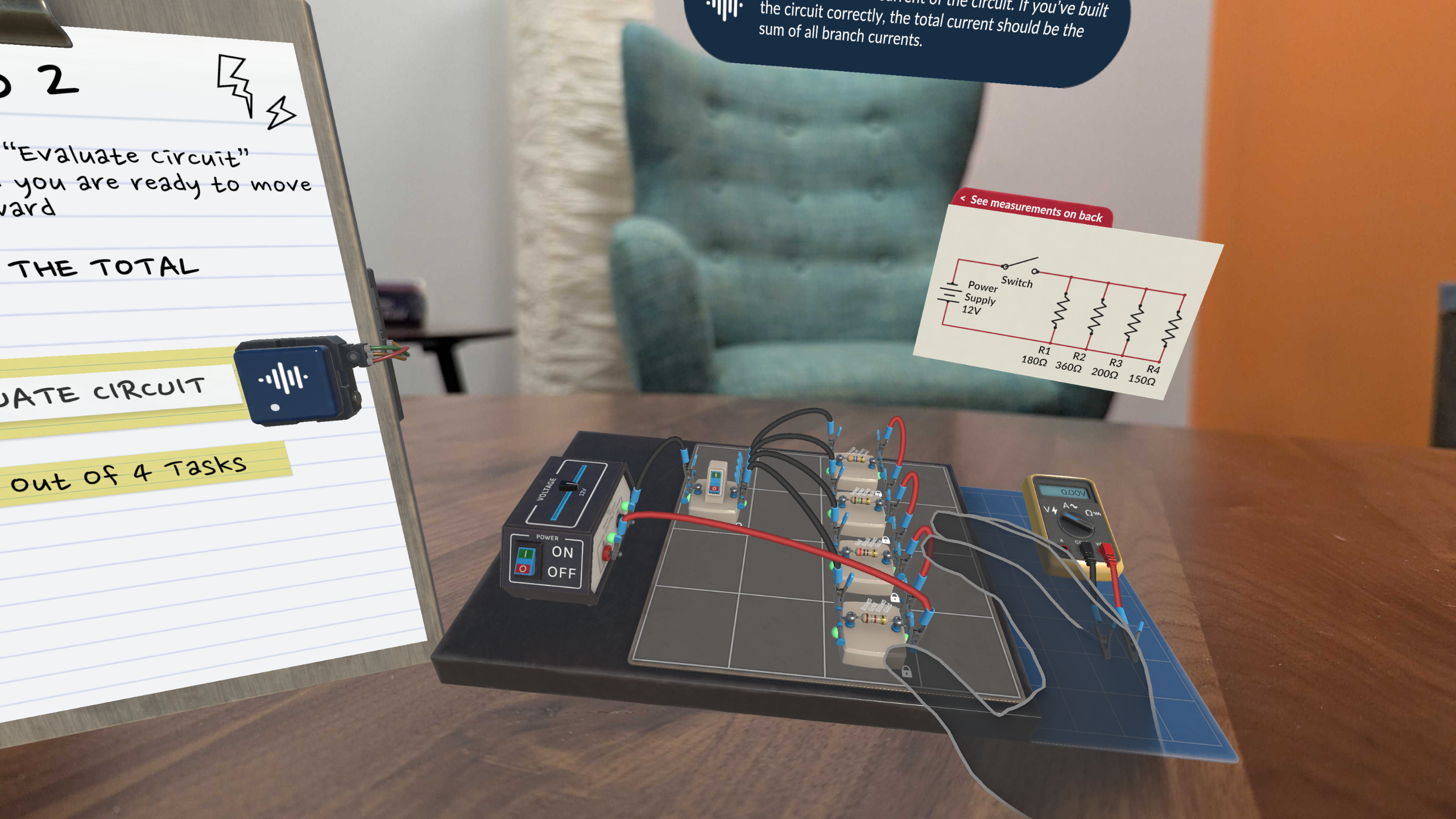
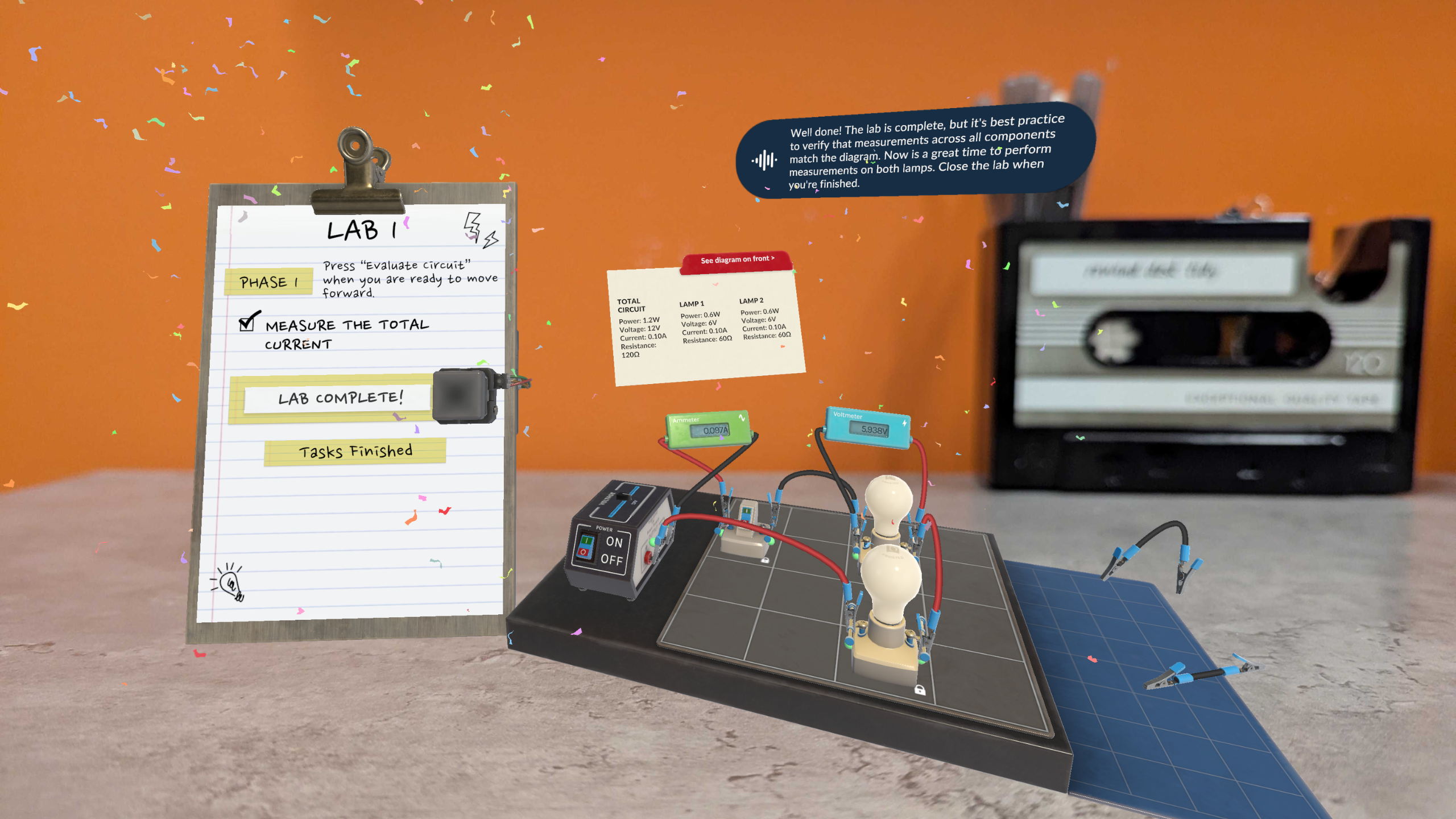
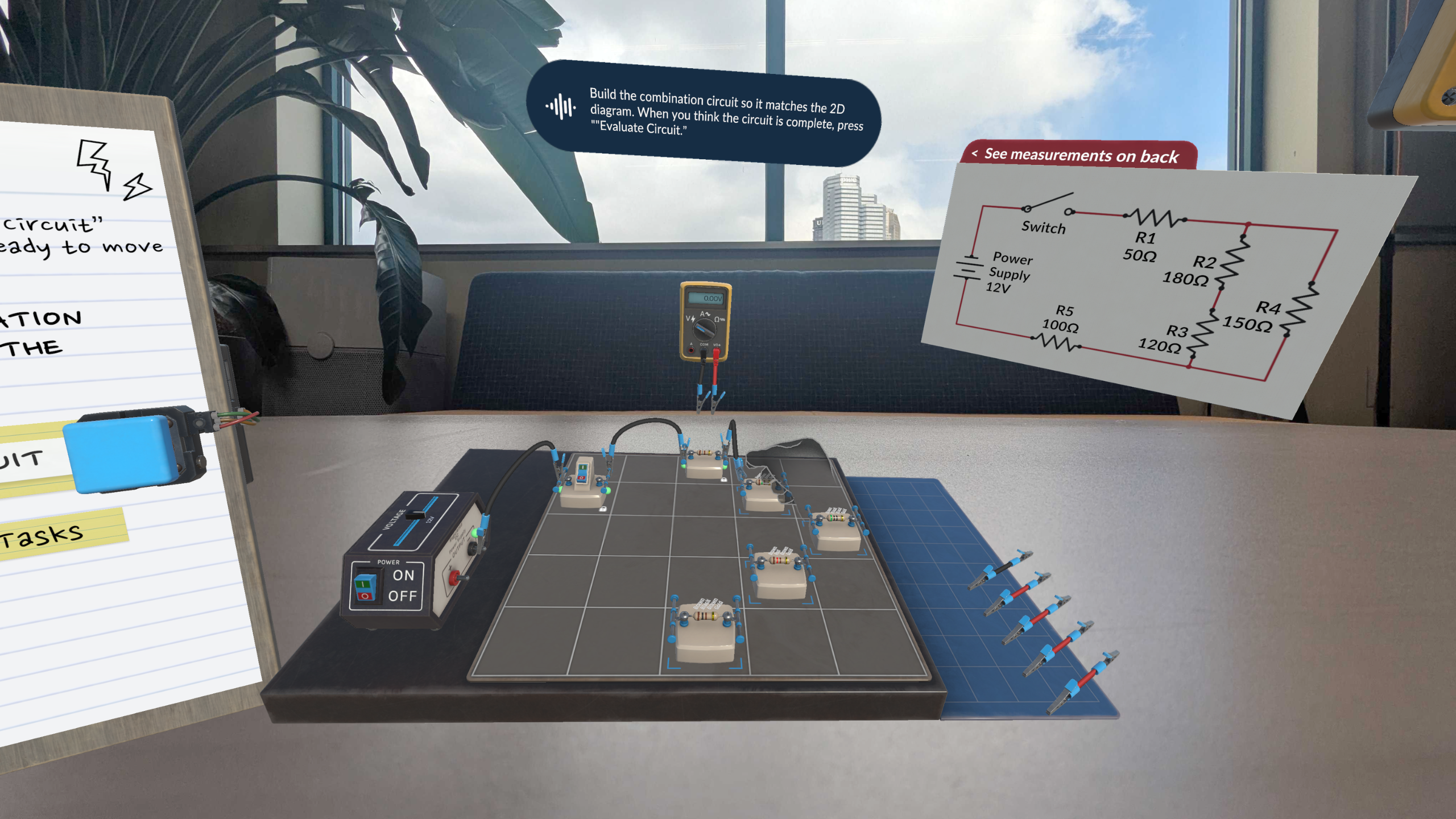
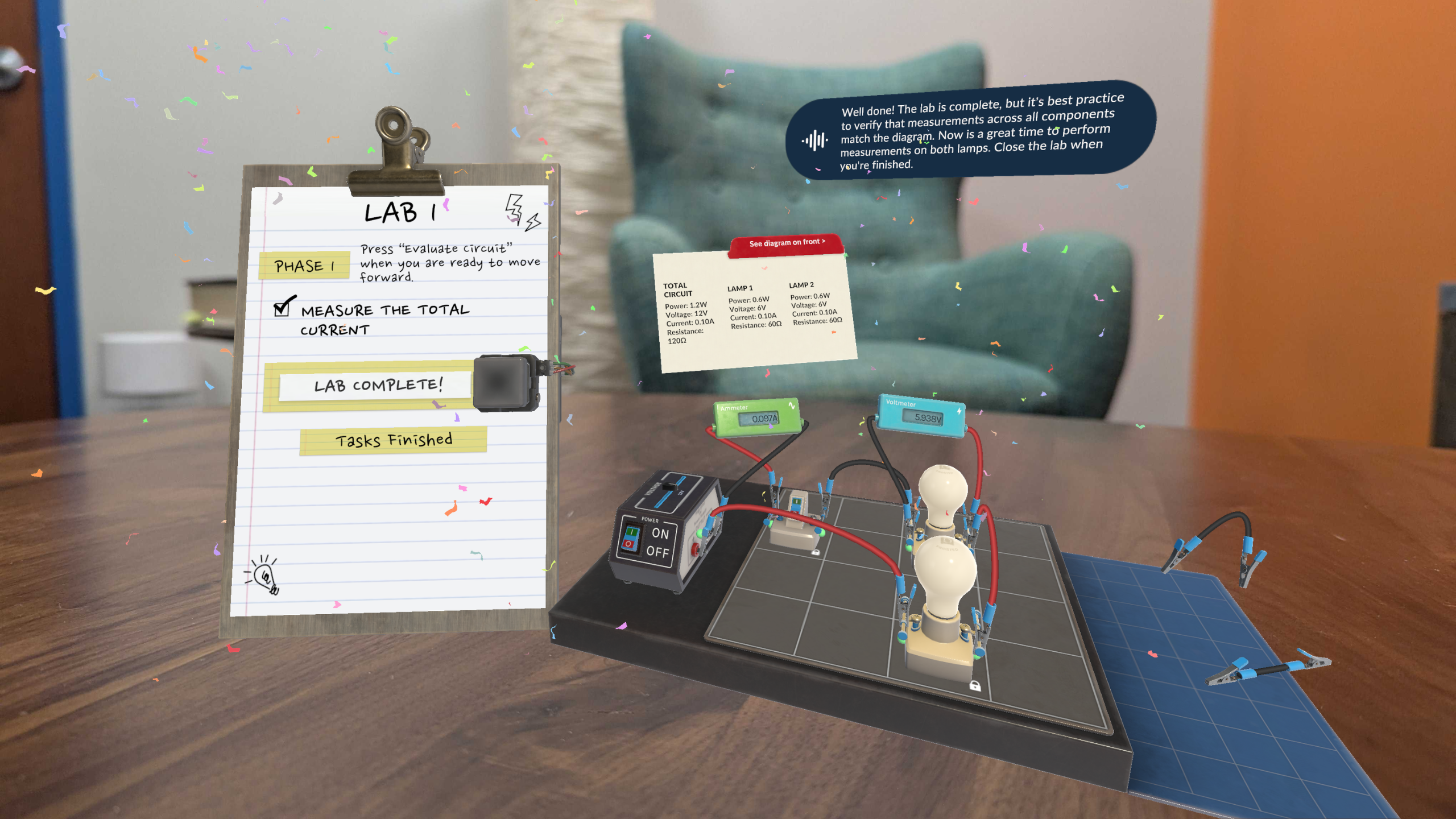
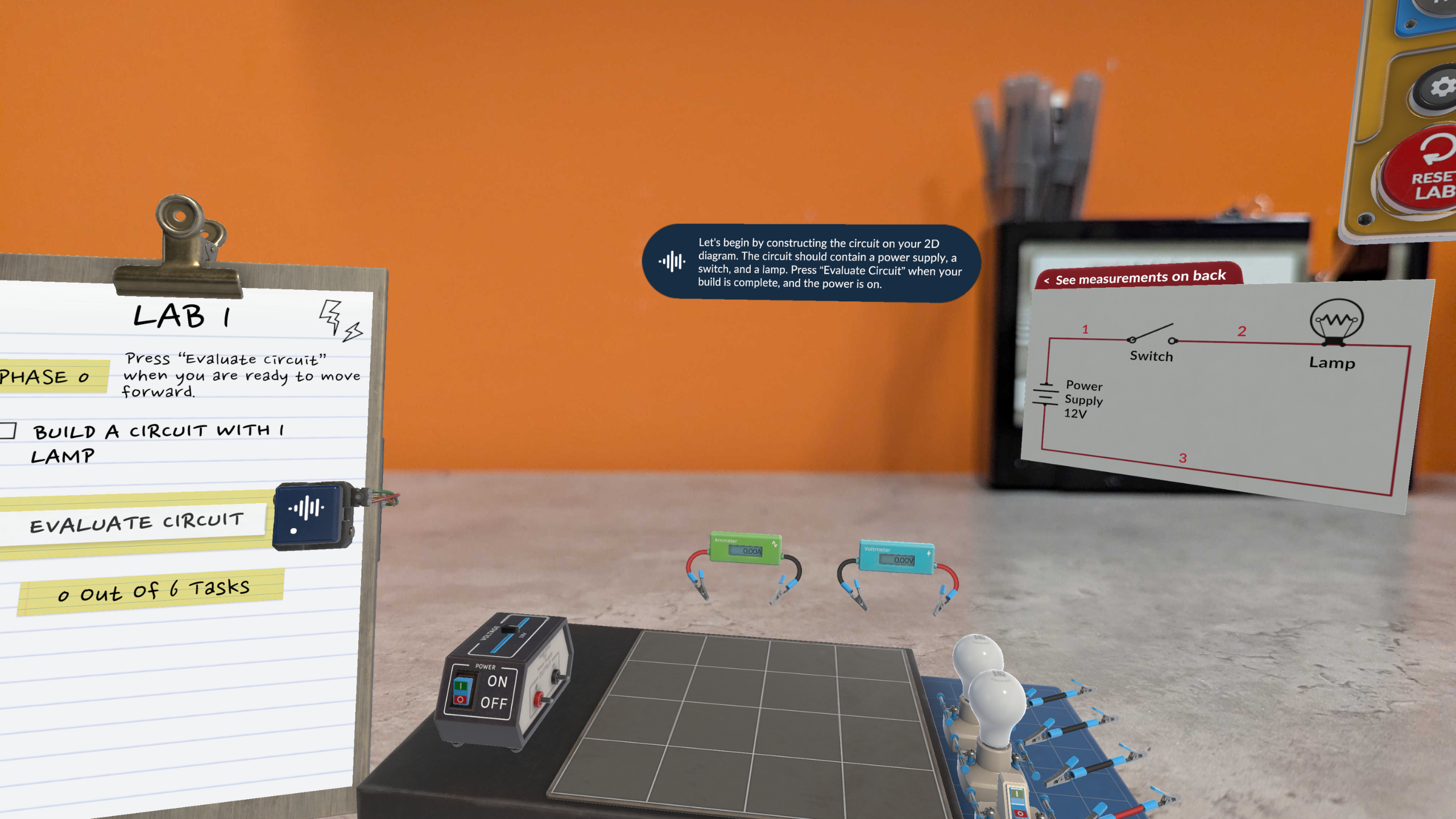
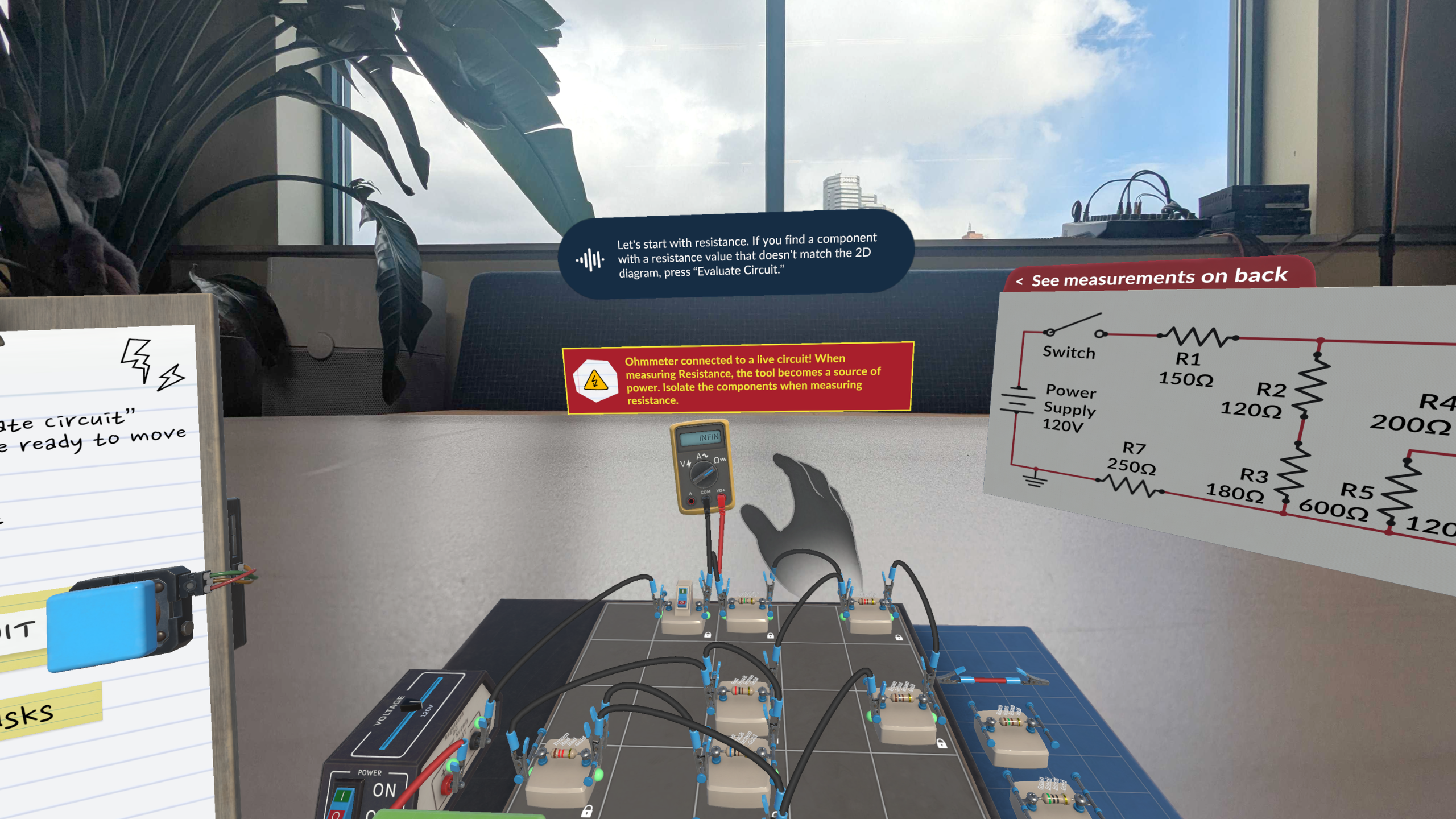
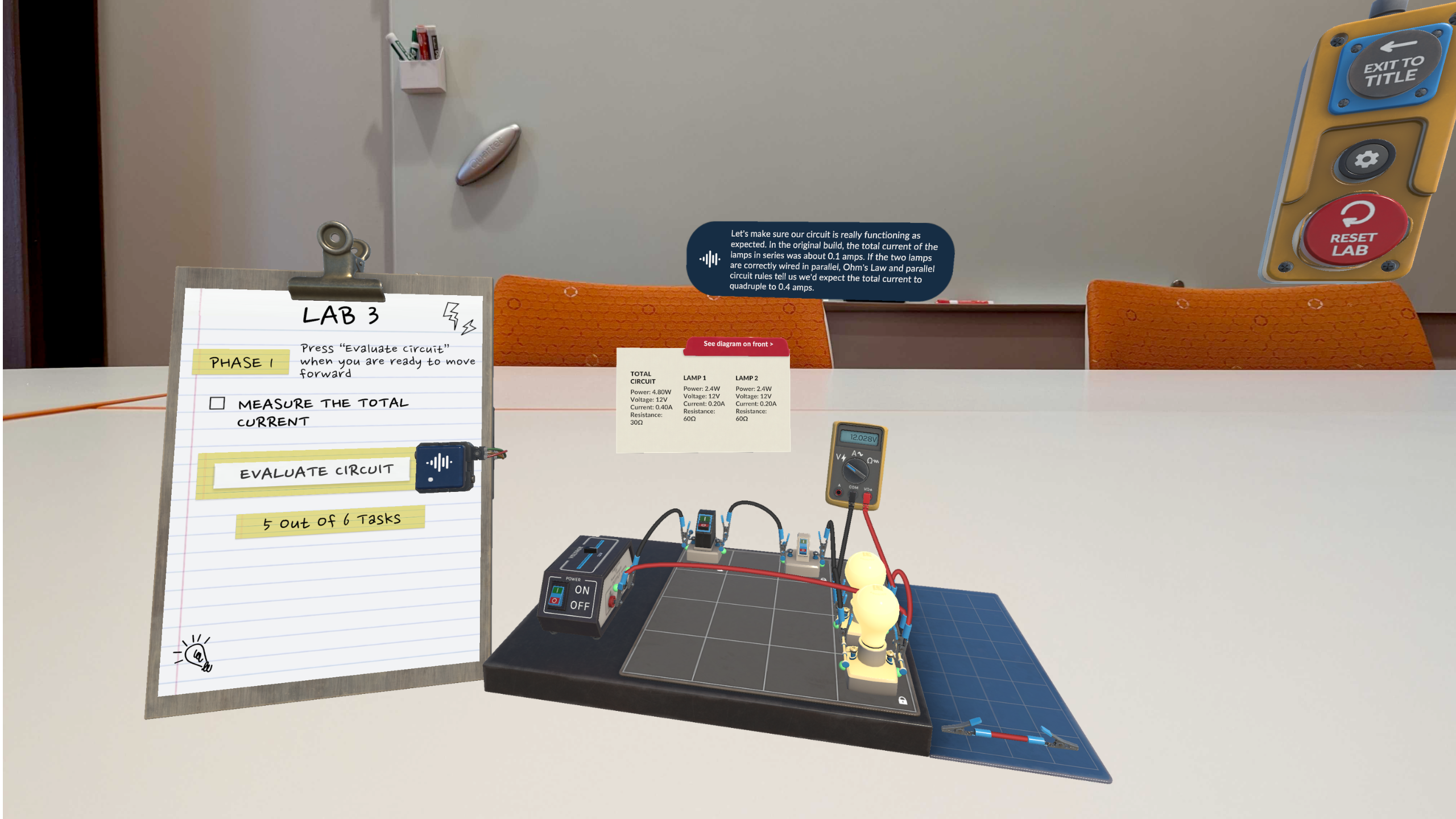
- Build Labs: Guided step-by-step experiences where students interact with virtual components and an MR circuit diagram to construct working circuits from scratch, complete with integrated evaluation checkpoints, voice-over (VO) guidance, and text hints.
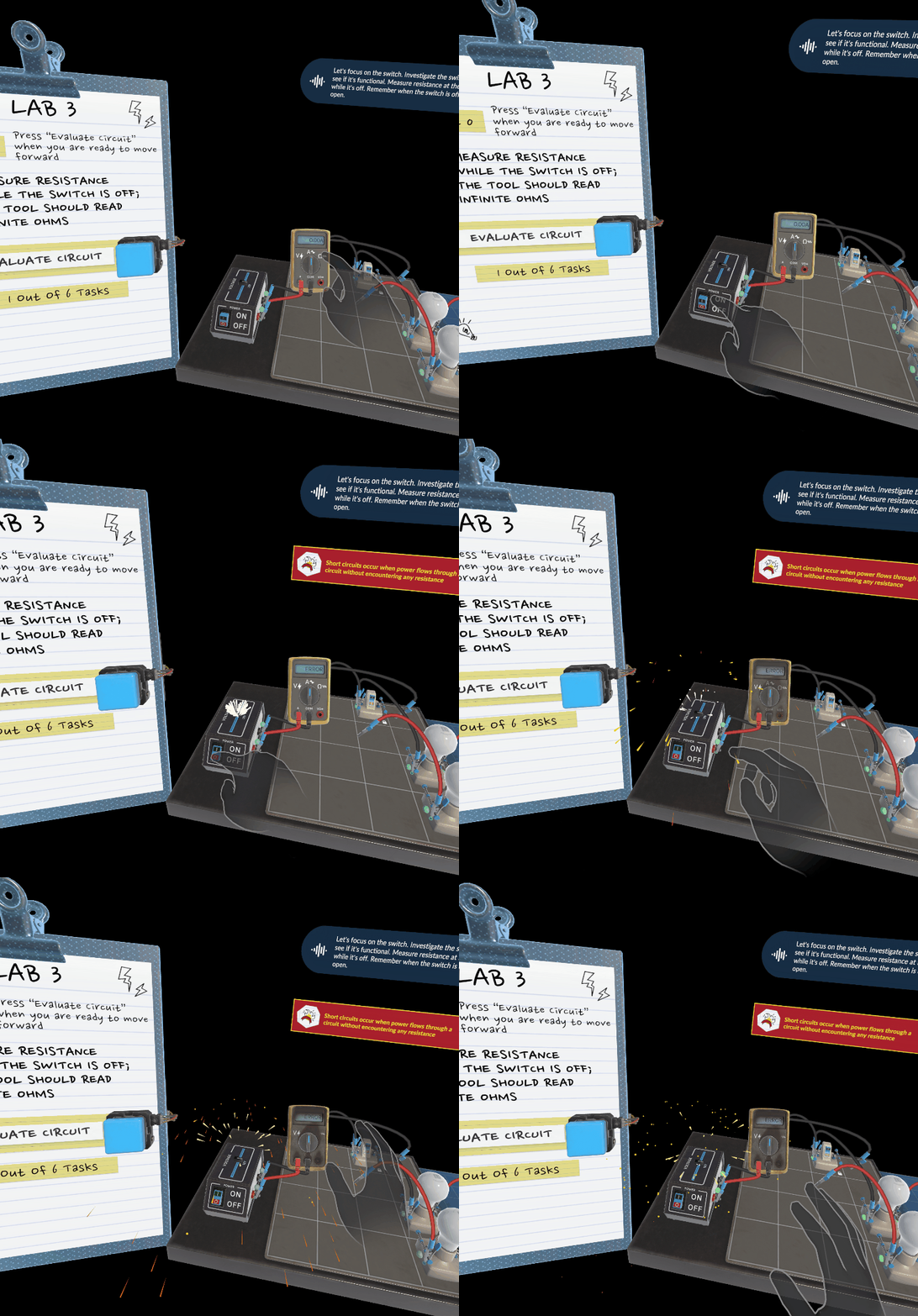
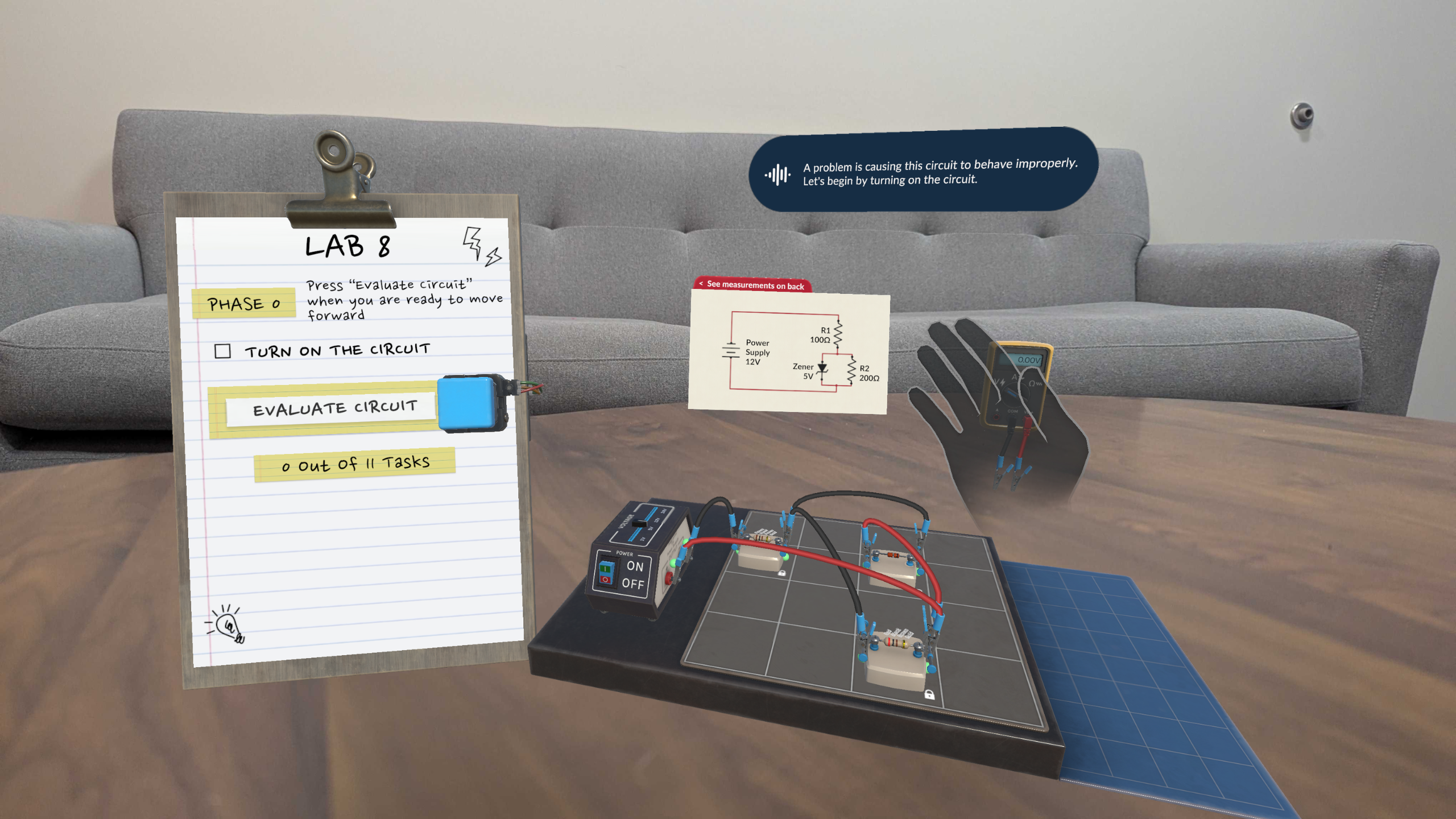
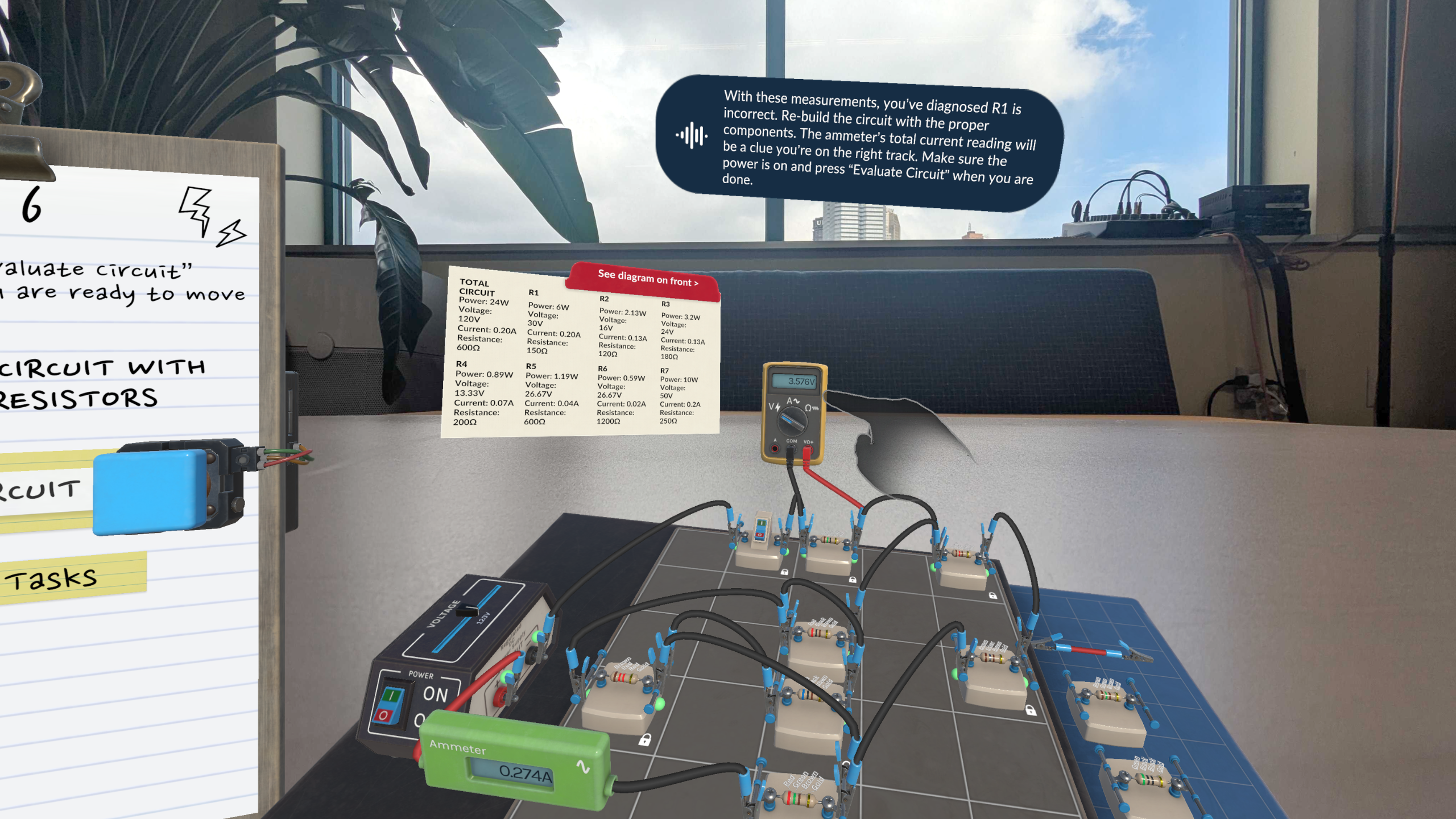
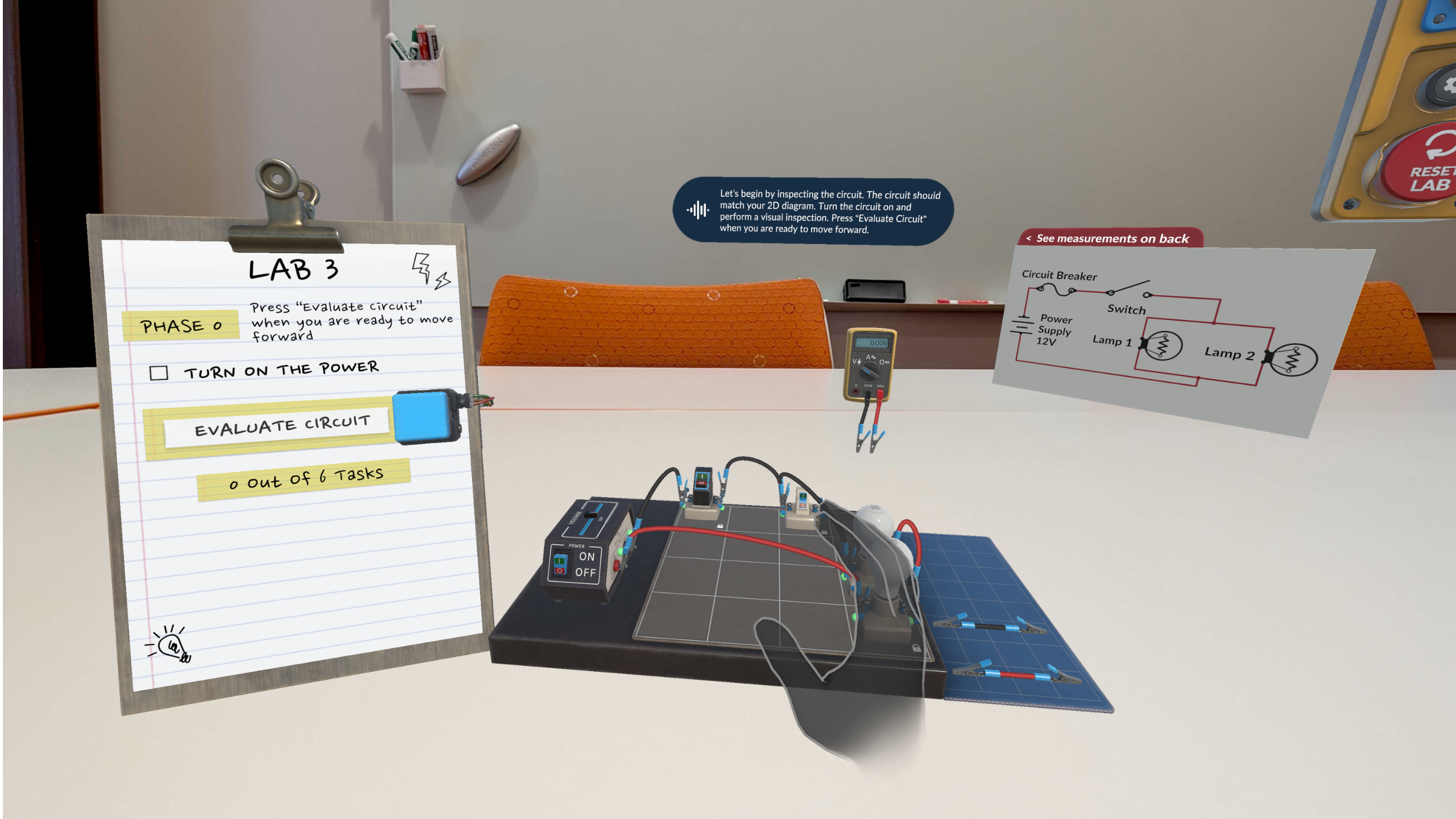
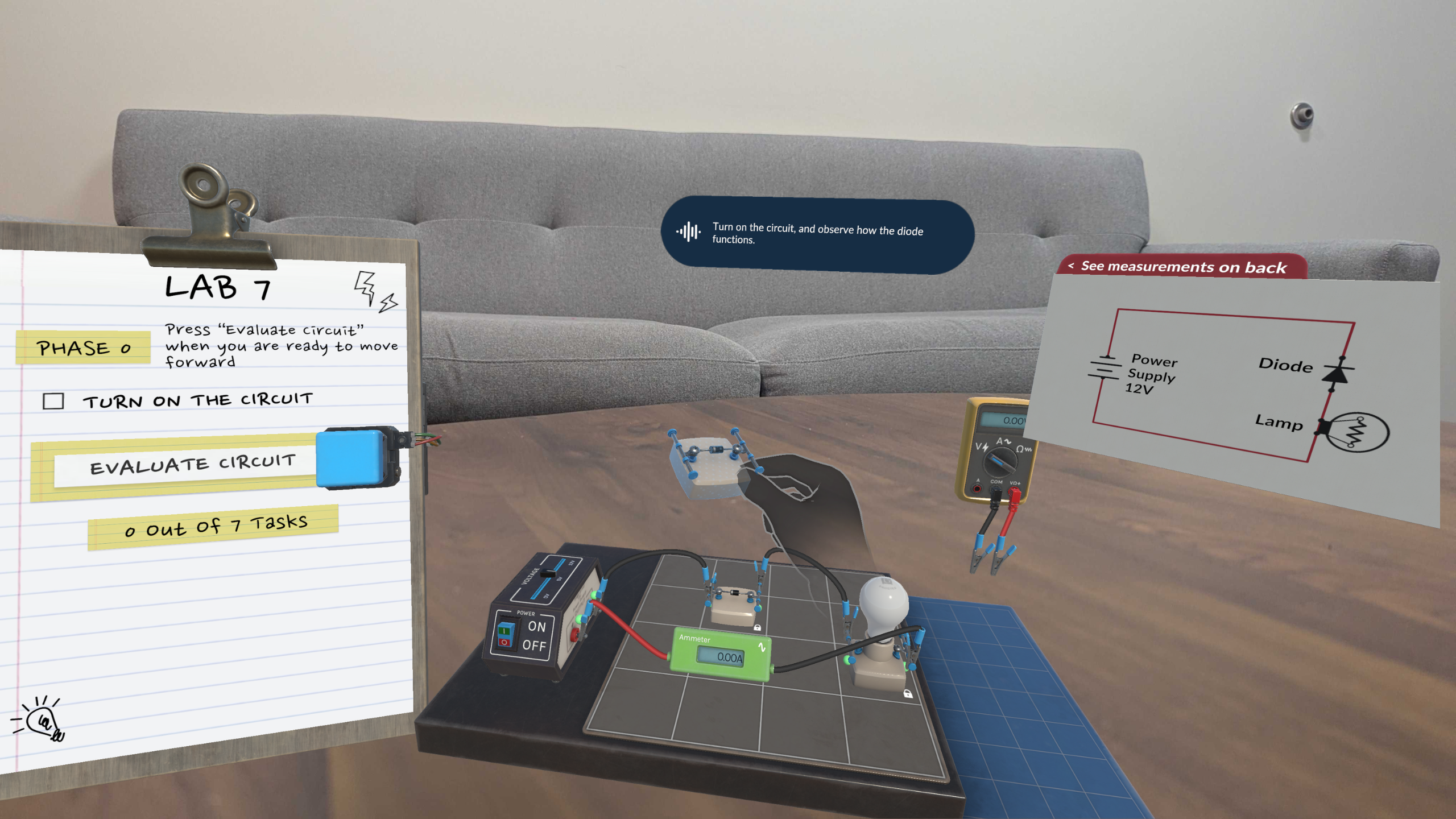
- Troubleshooting Labs: Diagnostic challenges where students are presented with pre-built, faulty circuits. Guided by circuit diagrams and diagnostic checklists, students must identify flaws, execute repairs, and test their solutions.
- Controller-Free Interactions: Built specifically around intuitive hand-tracking rather than traditional controllers, lowering barriers to entry and allowing students to directly touch and manipulate components.
- Dynamic Feedback Systems: Carefully tuned hint and feedback systems ensure students receive appropriate guidance during self-led sessions without sacrificing the challenge or learning depth.
![]()
Dunwoody Immersive partnered with developer Schell Games to create eight Mixed Reality (MR) laboratories for a fully digital, dual-enrollment DC Electricity course aimed at high school students. Designed for Meta Quest 3 and 3S hardware, the software replaces physical laboratory environments with fully digital, student-led simulations that rely on native hand-tracking rather than handheld motion controllers.
The curriculum features two primary module types:
Build Labs: Guided, step-by-step interactive sessions where students assemble functional circuits from scratch using a virtual MR circuit diagram, text hints, voice-over instruction, and automated evaluation checkpoints.
Troubleshooting Labs: Diagnostic exercises requiring students to evaluate malfunctioning pre-built circuits, identify hardware or wiring errors using diagnostic checklists, and execute working repairs.
This platform is intended for high school students pursuing vocational electronics education, as well as academic administrators seeking scalable educational tools. It eliminates physical safety hazards, mitigates high component costs, and removes the requirement for in-person proctors or dedicated classroom lab supervisors.
The project addresses the national skilled trades shortage projected through 2030 by expanding access to technical training. By combining dynamic hint systems with self-directed problem-solving, the software establishes a reusable structural blueprint for scaling interactive, remote vocational training across STEM disciplines.
- mixed reality (MR)
- DC Electricity
- Schell Games
- Dunwoody
- educational VR games
- virtual labs
- skilled trades gap
- VR game development
- circuit troubleshooting