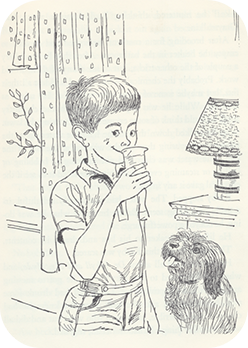
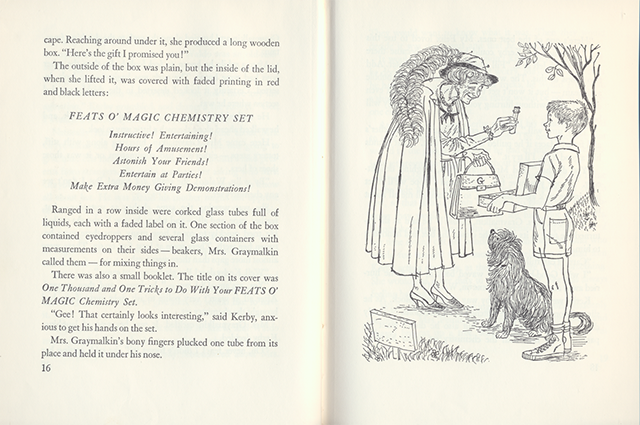
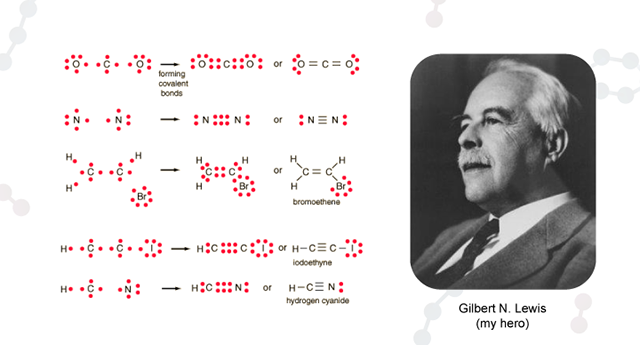
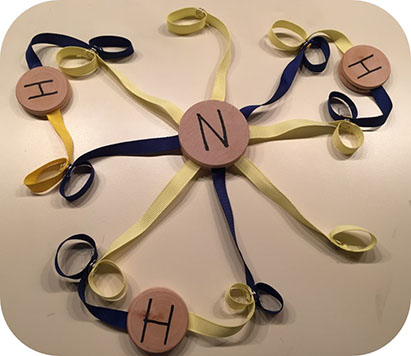
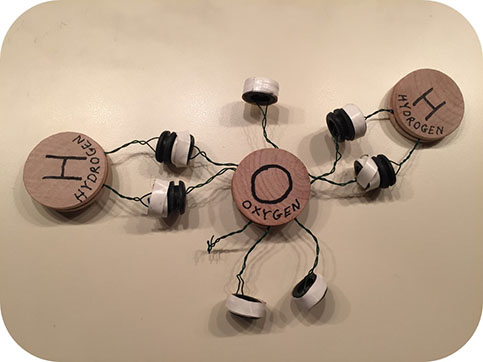
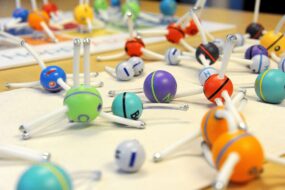
[{"content":{"text":"Note: This is a repost from the <\/em>Happy Atoms<\/em><\/a> site; the \"<\/em>Origin Story<\/em><\/a>.\"<\/em><\/p>Happy Atoms<\/a> is a project that has been germinating in my brain for about forty years. It all began in the library of Riverview Elementary School, where I stumbled upon the Scott Corbett<\/a> \u201cTrick\u201d books. This was a series of children\u2019s books about a boy named Kerby Maxwell who becomes the owner of a magic chemistry set that becomes the center of his many adventures.<\/p>"},"id":"0089cf0f-e8d9-4381-ac0a-f1b7b6945541","isHidden":false,"type":"textBlock"},{"content":{"images":["file:\/\/tx9155ybyrv6owdp","file:\/\/ep2eqip29gd9oih0"],"caption":"","ratio":"","crop":"false","gallerytype":"static"},"id":"b41a54c4-5ec5-4605-bbd7-2799abee1fb3","isHidden":false,"type":"galleryBlock"},{"content":{"text":"These books seem to have gone out of fashion today, perhaps because the idea of a boy who lives by the motto \u201cA dedicated scientist never hesitates to experiment on himself,\u201d and mixes and drinks unlabeled chemicals given to him by a stranger might not seem completely safe to today\u2019s parents. But to me, it was the stuff of inspiration. Despite my pleas, however, my parents were not ready to invest in a chemistry set, which left my alchemical tinkerings in the realm of vinegar and baking soda.<\/p>But chemistry stayed on my mind. As I grew older, I was fascinated to learn about the periodic table \u2014 the notion that everything in the universe was made up of a patterned set of one hundred microscopic building blocks seemed absolutely amazing. In school we learned that water was H2O, and salt was NaCl, but I wanted to know so much more! I beleaguered my poor science teacher with questions about chemical formulas \u2014 what\u2019s the formula for paper? For glass? For air? For rocks? For blood? For gasoline? For plastic? Can every atom combine with every other atom? <\/p>The answers were dispiriting. I was usually told either \u201cit\u2019s too complicated,\u201d or \u201cgo look it up,\u201d which of course is adult speak for \u201cI don\u2019t know.\u201d I wanted to look these things up\u2026 but where? How? If everything in the universe can be represented by simple formulas, why aren\u2019t they in my science book? Why am I forced to memorize the symbols of the periodic table if we aren\u2019t going to use them for anything?<\/p>"},"id":"5d0231b4-3d8a-4ae1-885f-6f80ca96307c","isHidden":false,"type":"textBlock"},{"content":{"level":"h2","text":"Molecules and Happiness<\/strong>","customid":""},"id":"2b06c1f5-82bb-4a94-9ce1-343e73baf082","isHidden":false,"type":"headingBlock"},{"content":{"text":"Eventually I got to high school, and was very excited to get into an honors chemistry class. I learned a lot of interesting things there about electron orbitals, measuring pH, how to balance chemical equations, and of course lots and lots of memorizing the periodic table, but something was missing. We learned about how many neutrons each element has, and what happens when you mix acids and bases, but we learned almost nothing about how molecules were formed. I could tell you how many protons were in beryllium, but where was beryllium in the world? I felt as if I\u2019d learned the letters of the alphabet, but never learned how those letters formed into words.<\/p>In college I studied computer science, which required more chemistry classes, and at last, eureka! We started to learn something about how atoms formed into molecules! I was most fascinated with Lewis diagrams, which are a way of showing how atoms share electrons. It\u2019s a simple but strange notion \u2014 each atom innately has a certain number of electrons in its outermost shell, but wishes it had more. Hydrogen, for example, has one electron, but it wishes it had two. As a result, hydrogen atoms tend to pair up, sharing their electrons so that they each have access to two. Oxygen has six, but wishes it had eight. If it meets up with two lone hydrogens, it can make them happy by sharing an electron with each of them, and they can make it happy by sharing their electrons with oxygen. Of course, it\u2019s silly to think of atoms being happy or sad \u2014 all we are talking about is the fact that atomic forces make atoms stick together in certain ways \u2014 but as humans, we tend to anthropomorphize everything, because it is easier to think about, and even professional chemists talk about what different atoms \u201cprefer.\u201d<\/p>"},"id":"8b751f99-b417-4be2-b2a7-6322190768a6","isHidden":false,"type":"textBlock"},{"content":{"location":"kirby","image":["file:\/\/sfbsyrc6gwylfedg"],"src":"","alt":"Diagram of moleclues forming covalent bonds","caption":"Laying the groundwork for Happy Atoms","link":"","ratio":"","crop":"false"},"id":"e3d67ee3-ffd6-46d9-9aa8-587554cb829b","isHidden":false,"type":"imageBlock"},{"content":{"level":"h2","text":"The Diagram Dilemma<\/strong>","customid":""},"id":"c00f457c-4e63-4bbb-a3c6-83d5316bebc5","isHidden":false,"type":"headingBlock"},{"content":{"text":"I was in love with this notion of using simple diagrams to figure out which atoms would combine with which others, and the margins of my notebooks started to fill with Lewis diagram doodles of molecules. But soon, new frustrations arose: I could draw diagrams of all kinds of interesting looking molecules. I could easily see that C2H6O was likely to be a stable molecule\u2026 but what was it? I wanted to develop intuition about how molecular structure made things behave in the real world \u2014 but how could I do that if I couldn\u2019t even figure out what the formulas represented?<\/p>While this troubled me, it was no trouble at all in terms of my classes. An intuitive grasp of how chemical formulas relate to the real world was not something that was needed to pass \u2014 I found all that was necessary was to learn how manipulate various abstract formulas, which as a computer science student, was not hard to learn. I never much understood what any of it really meant, but no one seemed to mind that but me.<\/p>And that could have been the end of my chemistry career. I moved on to become a professional software engineer, and eventually a computer game designer. But I never forgot the Lewis diagrams that intrigued me so much, and would occasionally find myself doodling out molecules, and wondering what they really were, and if they really existed. Years later, when I was teaching at Carnegie Mellon<\/a>, I found myself wondering if creating a digital representation of Lewis diagrams could be the foundation of a computer game. I sketched out some ideas, and worked with a graduate student, John Kolencheryl, to build a prototype. It was a crude game that involved dragging electrons around to try to make all the atoms in the vicinity \u201chappy.\u201d It had a lot of flaws, but it did work. Only one thing troubled me \u2014 playing it felt very abstract. Manipulating the electrons was tedious. I found myself wishing I could just reach my hands into the game, grab the atoms, and bring them together like the physical matter they were.<\/p>"},"id":"6f2d29db-c724-4672-a2d6-01444677b47e","isHidden":false,"type":"textBlock"},{"content":{"location":"kirby","url":"","video":["file:\/\/4yvikbtaeqnsdd8k"],"poster":[],"caption":"","autoplay":"false","muted":"true","loop":"false","controls":"true","preload":"auto"},"id":"51f4fa4c-2db9-417a-a9e1-71ccebb41331","isHidden":false,"type":"videoBlock"},{"content":{"text":"Then one day I got an email from our local elementary school. They were having a \u201cscience decathlon\u201d \u2014 would I mind coming in to talk about how computer games are made? On a whim, I wrote back saying that I could do that, but I could also give a demonstration about how atoms formed into molecules \u2014 would that be okay? The teacher thought that sounded even better, so suddenly I was on the schedule. Now I had to think \u2014 how was I going to do this? I started some experiments with cloth and ribbons and Velcro to make models of how atoms used electrons to connect, but the Velcro was hard to work with. I needed something more solid. I tried some experiments with snaps, and they worked great! In a crafting frenzy, I made dozens of atoms out of wooden discs, colored ribbons, metal snaps, and lots and lots of hot glue.<\/p>"},"id":"244f8c20-0511-4f1e-9d36-6fcd44ff6784","isHidden":false,"type":"textBlock"},{"content":{"location":"kirby","image":["file:\/\/xn1vakfmqrcdevz0"],"src":"","alt":"","caption":"","link":"","ratio":"","crop":"false"},"id":"d850c009-71a9-4870-bc41-bdfedac6a2fb","isHidden":false,"type":"imageBlock"},{"content":{"level":"h2","text":"The Building Blocks of the Universe<\/strong>","customid":""},"id":"bde96c0b-bb17-4829-83d7-49fe1dfb9e25","isHidden":false,"type":"headingBlock"},{"content":{"text":"On the day of the \u201cscience decathlon,\u201d I donned a lab coat I bought on the Internet and nervously faced a roomful of antsy fifth and sixth graders. I asked them to think about what would happen if you kept dividing a drop of water in half \u2014 could you do it forever? No, they said with certainty, eventually it would be too small to see. \u201cBut I have a super microscope,\u201d I countered, \u201cI can see the drop no matter how small it gets.\u201d They looked at each other uncertainly. They had no idea. I asked who knew what an atom was. A small number of hands. I started to panic \u2014 how was I going to explain electron bonding to students who have never even heard of an atom? I calmly explained that you can only divide a drop of water in half about seventy five times before you can\u2019t go any farther \u2014 that there is a smallest drop of water that can\u2019t be broken up any further, and it is called a \u201cmolecule.\u201d Brows furrowed as they stared at me with some suspicion. Then I asked if anyone knew the formula for water \u2014 and every hand in the room shot up! \u201cH2O!\u201d they shouted excitedly. <\/p>I reeled for a moment at the realization that their education had provided them with this fact, but had not yet managed to connect it to any real meaning. \u201cAnd what does that mean \u2014 does anyone know?\u201d Many hands went down. One student nervously ventured \u201cOne hydrogen and two oxygens?\u201d \u201cVery close! Two hydrogens, and one oxygen!\u201d I then apologized for chemistry\u2019s strange policy of putting the adjective after the noun. \u201cEvery bit of water in the world is made of these building blocks \u2014 two hydrogens, and one oxygen. We call these building blocks \u2018elements,\u2019 And everything in the entire universe is made up of building blocks like this \u2014 just like Legos. How many types of blocks do you think there are?\u201d They looked at me incredulously. \u201cIn the whole universe? Must be zillions!\u201d called one. \u201cNope,\u201d I replied. \u201cThere are only about one hundred. And this,\u201d I pointed to the periodic table, \u201cis the list of all of them. Everything in the entire universe is made of these one hundred or so Lego blocks, and nothing else. And most of the things you see only use about thirty of them. Today, I\u2019m going to show you how to join them together to make everything in the universe.\u201d<\/p>I gave each student one atom, and explained that most atoms, when they are alone, are unhappy, because they have unconnected spots. You make them happy by connecting them together into molecules. I told them I\u2019d give out points for each of the molecules they could make \u2014 one point for each atom in each molecule. Thrilled to be able to get out of their seats, they started forming into groups and snapping together my primitive models, then bringing them for me to inspect. Some were malformed, with simple mistakes which I could correct, but quickly students started bringing me small, properly formed molecules. Two boys brought a tiny molecule, and I explained \u201cTwo hydrogens together! That\u2019s hydrogen gas! It used to be what they put into blimps \u2014 but they stopped because it kept exploding.\u201d <\/p>\u201cBOOM!\u201d shouted the boys gleefully, and ran off to see what else they could make. Two girls brought a pair of oxygen atoms. \u201cDoes this work?\u201d they asked uncertainly. \u201cNot only does it work \u2014 this is the oxygen molecule! It\u2019s in the room all around us \u2014 if we go more than five minutes without breathing it, we die.\u201d Their eyes got big, and they went off to make more. Gradually, the students started making more and larger molecules that were beyond my ability to recognize. They seemed to like stumping me just as much as learning what they had made. Gradually, the student groups got larger and larger, as they set to form the largest molecules they could manage. Like doctors around an operating table, they all studied what they were making, and frantically tried to connect things together properly. I was astonished to hear them calling out \u201cTwo open spots here! Who has an oxygen? Wait\u2026 sulfur would also work!\u201d or \u201cI either need a nitrogen, or three hydrogens \u2014 can anyone help?\u201d<\/p>"},"id":"89f146cd-fecd-4f01-b422-f1ab3c1107ac","isHidden":false,"type":"textBlock"},{"content":{"location":"kirby","url":"","video":["file:\/\/gkfenztax95j5jfm"],"poster":[],"caption":"","autoplay":"false","muted":"true","loop":"false","controls":"true","preload":"auto"},"id":"eebe1a43-eaae-42e6-9fb4-ad282b4cd309","isHidden":false,"type":"videoBlock"},{"content":{"text":"After thirty minutes of enthusiastic play, I called time. They returned to their seats, somewhat exhausted, but excited to see the dozens of molecular formulas on the blackboard that they had created together. I asked them, \u201cWhen we started, did you think you could make this many?\u201d \u201cNo way!\u201d They said. \u201cI guess we\u2019re pretty good at this!\u201d \u201cI guess you are!\u201d I agreed. Then I asked them what they learned about the different atoms they had been playing with. Lots of hands went up. \u201cHydrogen is little, but it\u2019s really useful,\u201d said one student. \u201cThere are lots of kinds of salts,\u201d said another. \u201cCarbon connects to everything,\u201d said a third. \u201cWere there any atoms you didn\u2019t like?\u201d I asked. \u201cYeah, beryllium,\u201d said a frowning boy, \u201cI got stuck with that, and it has a really hard time connecting with things.\u201d \u201cIt\u2019s not as bad as helium and neon,\u201d countered a girl. \u201cThey are already happy, and never connect with anything, ever!\u201d <\/p>Then the bell rang, and they thanked me, and filed out, leaving me with their teacher, whose mouth was hanging open. \u201cI have never seen anything like that in my life!\u201d She exclaimed. \u201cWhen you started, I was sure this was going to be over their heads \u2014 but they got it so fast! And they were so excited!\u201d I told her I was as surprised as she was \u2014 I had no idea they would understand it so easily, or that they would figure out so much on their own. All I had done was give them five minutes of explanation about what atoms were, and how they connected, and everything else they figured out on their own. I ran the demonstration with a few more classes, and got the same results each time. By the end of the day I was certain that I had something that had potential.<\/p>"},"id":"e9e92cf7-e13c-4685-bb5a-a5feae380e46","isHidden":false,"type":"textBlock"},{"content":{"level":"h2","text":"Building on the Potential<\/strong>","customid":""},"id":"3d1411de-be89-4cce-ab12-a9e2c631c14d","isHidden":false,"type":"headingBlock"},{"content":{"text":"As I reflected on it over the coming weeks, I found myself focusing more on the flaws of my models. The snaps were a little hard to use. The ribbons tended to get tangled. And most importantly, the students kept making molecules I couldn\u2019t identify. I made a new set that used magnets and wires instead of ribbons and snaps \u2014 and it was a big improvement. It was really fun to fiddle with, and it was really cool how the magnets would pull the atoms together, in a rough simulation of how they really connect. When I would make a triple bond between two nitrogen atoms, I could really feel the pull of the forces holding them together. But how to solve the problem of identifying the molecules? So many different molecules were possible \u2014 what I really needed was a computer to do the identification. Thinking about many solutions, I kept coming back to the idea of a computer vision algorithm.<\/p>"},"id":"1ab4664d-dc7e-4e17-9430-8c9fa3c919c4","isHidden":false,"type":"textBlock"},{"content":{"location":"kirby","image":["file:\/\/jqkff5rypyzqdq3m"],"src":"","alt":"","caption":"","link":"","ratio":"","crop":"false"},"id":"2652c702-0fbd-47cb-a722-5577904f76be","isHidden":false,"type":"imageBlock"},{"content":{"text":"Every year, at Schell Games<\/a>, we do a thing called \u201cJam Week<\/a>,\u201d where we stop all our normal projects, and work on nothing but passion projects for one week. I described the problem I was trying to solve to several people at the studio, and Russell Ball stepped up and offered to give it a try. I spent the week making atoms out of colored spheres and magnets, and Russ experimented with different vision algorithms, trying to recognize and identify colored spheres in digital photographs. Results were really promising! The algorithms needed to be tricky, but some basic identification was definitely possible.<\/p>Not long after, Steve Schneider from WestEd<\/a> approached me: the US Department of Education<\/a> was giving out grants to small businesses that had good ideas for teaching science \u2014 did Schell Games have any projects that might fit? We\u2019d never tried applying for grants before \u2014 but this did seem like a good fit, so we applied. To our astonishment, it got funded! Suddenly, my basement hobby project was a real, funded project we were on the hook to create and distribute! We were excited\u2026 but also terrified!<\/p>Step by tentative step, we found our way forward. Chris Patlovany, an intern, did all kinds of experiments with the right way to make our physical models. Yotam Haimberg, one of our game designers, happened to have a degree in chemistry and was an ideal director for the project. We found a phenomenal subject matter expert, Dr. Catalina Achim, whose specialty was how to best teach chemistry to younger students. Mike Lee took over vision algorithms and started to have great success. We hired Brooke Morrill as a full-time educational researcher, who helped so much coordinating and writing the much more complicated phase II grant proposal\u2026 which we received! That night, we were celebrating with a Chinese dinner, and my fortune cookie read \u201cAn old wish will come true.\u201d I wondered what it meant at first \u2014 and then suddenly I thought back to the third grade, when I first discovered the joy of invention, and was determined that one day I would grow up to be an inventor. I used to dream that one day, someone would say to me \u201cYour invention is so great that I\u2019m going to give you a million dollars.\u201d And now that had actually happened!<\/p>"},"id":"f1e004c3-7b58-4779-af71-20e4acd2ff0e","isHidden":false,"type":"textBlock"},{"content":{"location":"kirby","image":["file:\/\/dsi7ajfutcjt714n"],"src":"","alt":"","caption":"","link":"","ratio":"","crop":"false"},"id":"2083242a-f68b-48d9-9997-81de7af78140","isHidden":false,"type":"imageBlock"},{"content":{"level":"h2","text":"Evolution","customid":""},"id":"21f4d6a6-b0c2-467e-a2ef-54b12516d79c","isHidden":false,"type":"headingBlock"},{"content":{"text":"Phase II funding gave us a lot more confidence and ability to get the project finished. We put together a full team, whose first step was to create the design pillars that the whole project was formed around.<\/p>"},"id":"4715413f-9641-492e-93ca-ce173b9ed486","isHidden":false,"type":"textBlock"},{"content":{"images":["file:\/\/5j4o17dqs8nkz5o5","file:\/\/kbzeqdcxmxuhauqs","file:\/\/ao5icwj3c4uqvwqj"],"caption":"","ratio":"","crop":"false","gallerytype":"static"},"id":"5c00beaf-1f89-4dde-aa9a-81be573c7a9b","isHidden":false,"type":"galleryBlock"},{"content":{"text":"Cool new ideas started to rise up, like representing the world of molecules as a map that players could gradually discover, like explorers of a new world. Then, as we looked around for partners who could help with manufacturing and distribution, we met up with Thames and Kosmos<\/a>, one of the largest science kit manufacturers in the world. They were interested and enthusiastic, and we decided to team up together. We showed an early prototype at 2016 Toy Fair at their booth, and we were excited to win a \u201cBest of Toy Fair<\/a>\u201d award!<\/p>"},"id":"a16d6a5f-6c68-4cdd-b97b-873d4ff6efcf","isHidden":false,"type":"textBlock"},{"content":{"location":"kirby","image":["file:\/\/dte1xhcuvgr5cgnv"],"src":"","alt":"","caption":"","link":"","ratio":"","crop":"false"},"id":"f2811670-8c44-492a-9a05-256694b81601","isHidden":false,"type":"imageBlock"},{"content":{"text":"I worry that I\u2019m making it sound like the development of Happy Atoms<\/em> was obvious, and an easy road. In reality, it has been difficult decisions and uncomfortable compromises every step of the way. Not everything that subject matter experts, students, or teachers have had to say has been encouraging. Our simple system of modelling chemical bonds with the octet rule makes certain molecules off limits for our model. Boron and aluminum are conspicuously absent from our periodic table for this reason. Elements with atomic numbers larger than 20 are also a problem for this model. And these concerns are just the beginning \u2014 there are many, many ways that the Happy Atoms<\/em> system is not a perfect model of reality. For a while, this concerned us greatly, and we started to think that we might need to abandon the project; after all, isn\u2019t promoting an imperfect model educationally irresponsible? But we took great inspiration from the chemist Henry Bent, who insists that the purpose of a model is not be accurate, the purpose of a model is to give insight. Or, in the words of philosopher Hans Vaihinger<\/a>, \u201cIt must be remembered that the object of the world of ideas as a whole is not the portrayal of reality \u2014 that would be an utterly impossible task \u2014 but rather to provide us with an instrument for finding our way about in this world more easily.\u201d And we were finding that our system, though not perfect, was really helping people find their way through world of chemistry.<\/p><\/p>"},"id":"95d6b5bb-af04-4062-9bb9-81419f938da9","isHidden":false,"type":"textBlock"},{"content":{"level":"h2","text":"Helping Everyone Discover the World of Molecules<\/strong>","customid":""},"id":"da026217-0bd2-491d-a750-bce64acc7819","isHidden":false,"type":"headingBlock"},{"content":{"text":"As we move toward a launched product we are trying hard not to forget the purpose of Happy Atoms: To create an experience where anyone can intuitively understand the world of molecules, just by playing. Understanding chemistry is the key to solving the world\u2019s most challenging problems: curing cancer, purifying our water, finding new energy sources, stopping global warming \u2014 all these, and thousands more will be solved by those who understand chemistry. Because of this, I truly believe this is the most important project I have ever worked on. If this project can increase the number of students passionate about entering chemistry-related careers by even a tiny fraction, it could make a tremendous difference in the world. We continue to take inspiration from the story of ten-year-old Clara Lazen, who, with guidance from her science teacher, was given the opportunity to play with a college-level set of molecular models. She built a structure that seemed natural and intuitive to her, and asked her teacher what it was. He didn\u2019t know, and made some inquiries. The chemistry professors he talked to agreed that the molecule she had created should exist \u2014 but it was not in any known catalogue. No one had thought to create it before. As a result, Clara and her teacher published a paper together about the structure of tetranitratoxycarbon<\/a>.<\/p>"},"id":"9cc1f95a-5a46-4dac-83b3-dbd0f27e1b89","isHidden":false,"type":"textBlock"},{"content":{"location":"kirby","image":["file:\/\/6ubmopv4c0lgetj1"],"src":"","alt":"","caption":"","link":"","ratio":"","crop":"false"},"id":"2df75159-f09f-4023-a085-4ee3f3c417d4","isHidden":false,"type":"imageBlock"},{"content":{"text":"Clara\u2019s story is inspiring, because it shows that one inquisitive child can make a difference in the world of science. Our goal is nothing less than to open the doors to this same experience of playful exploration to millions of children and adults \u2014 to create a world where being ignorant about what we are made of is the exception, not the norm; to create a world where anyone willing to play will understand what our world is made of, and how and why it works.<\/p>"},"id":"e1a91706-6144-4b50-9492-5a819d5b110b","isHidden":false,"type":"textBlock"}]